
TL;DR

Get cleaning gear delivered free with Prime
- Fast, free delivery on millions of items
- Prime Video, Amazon Music and more included
- Member-only deals all year
Water spots are usually mineral deposits left when droplets evaporate, and hard water can make them more noticeable. Start with warm water, a soft microfiber cloth, and mild dish soap; use diluted vinegar only if the faucet manufacturer says it is safe for that finish. Rinse and dry the faucet after cleaning, then wipe away fresh droplets after use to help slow new spots.
A faucet can look clean after a shower and show pale rings or chalky specks by lunchtime. Those marks are usually mineral deposits left behind as water droplets dry, and hard water can make them appear faster.
You can often remove fresh spots with warm water, mild dish soap, and a soft cloth. The catch is that faucet finishes vary: a cleaner that suits plain chrome may dull or damage a special coating. This guide shows you how to start gently, when to use a stronger approach, and how to keep the spout and base looking clean without turning a quick wipe into a risky scrub.
You’ll also learn why vinegar is a conditional option, how to reach the narrow seam around a handle, and what to do when spots return every day. A small habit—drying the faucet after use—can spare you repeated cleaning.
Water spots are usually mineral deposits left behind as droplets evaporate; hard water can make them more noticeable.
Start with warm water, a soft microfiber cloth, and mild dish soap, then rinse and dry.
Use diluted vinegar only when the faucet manufacturer permits it for that finish, and keep contact brief.
Use a soft toothbrush for tight spaces around a base or handle; avoid abrasives and heavy scrubbing.
Wipe the faucet dry after use to reduce the droplets that can leave fresh marks.
How to Remove Water Spots From Bathroom Faucets
Mineral marks often appear as droplets dry. Start with warm water, mild dish soap, and a soft cloth; check the faucet maker’s care instructions before using vinegar or another stronger cleaner.
Why pale spots return
Water spots are usually mineral deposits left when droplets evaporate. Hard water contains more dissolved minerals, such as calcium and magnesium, so marks may show up faster or look more noticeable. Fresh residue is often easier to remove than repeated buildup.
Cloudy dots
Water beads on the upper curve and dries in place, leaving small pale marks.
Rings and crusty edges
Splashing or pooled water can leave deposits around the faucet base and seams.
Residue or finish wear?
If gentle cleaning does not change a mark—or the finish looks pitted, scratched, or uneven—it may be damage rather than mineral residue.
Four controlled steps
- Wipe gentlyDampen a clean microfiber cloth with warm water. Add a small drop of mild dish soap if needed; avoid pressing hard.
- Reach around edgesUse a soft toothbrush dampened with soapy water around the base or handle. Keep cleaner from pooling near seams.
- Rinse the surfaceWipe away soap with a clean, damp cloth so residue does not remain on the finish.
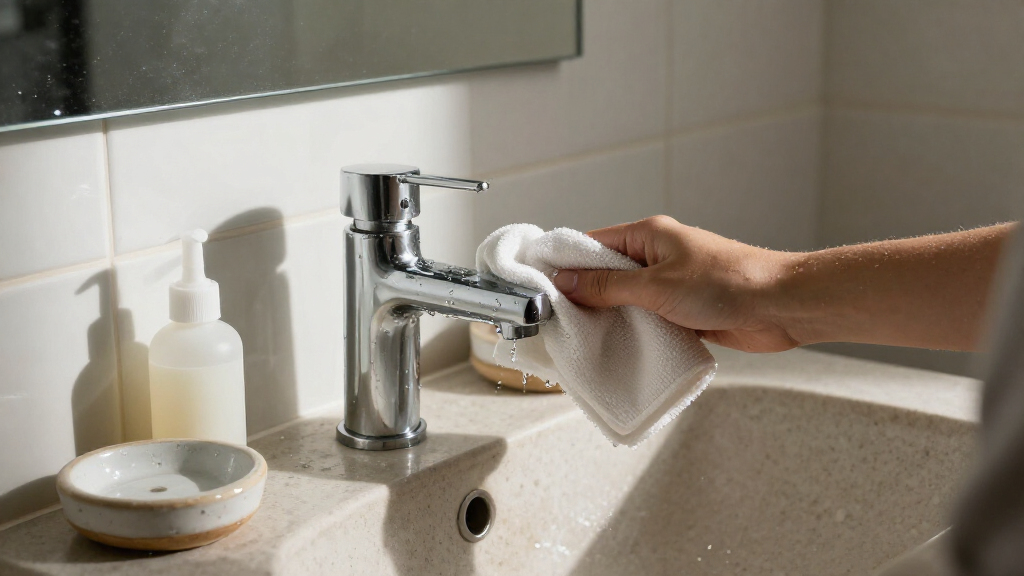
- Buff dryUse a soft towel to remove droplets, especially around the spout and base.
Make vinegar a conditional choice
Diluted vinegar may help dissolve mineral deposits. Acidic cleaners can harm some decorative coatings, so the manufacturer’s instructions decide whether it is suitable for your faucet.
Brief contact, full rinse
Dampen a cloth with a mild vinegar-and-water solution and place it over the spots briefly. Remove it, rinse thoroughly with clean water, then dry with a soft towel.
Stay with the gentle method
Skip vinegar when the finish guidance is unavailable or does not allow it. Do not soak, wrap, or leave acidic cleaner to dry on the surface.
Soft tools protect the finish
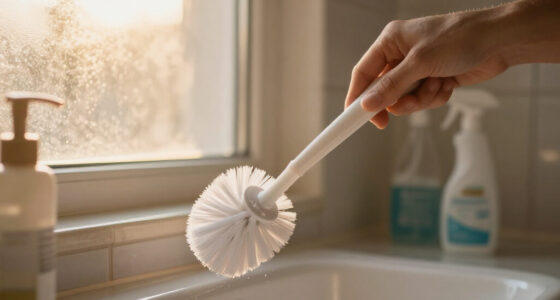
Lifts fresh residue with light wiping.
Use a little when warm water alone leaves residue.
Reaches around a handle or narrow base seam.
Buffs away droplets after rinsing or daily use.
Make the last step a quick dry
Drying removes droplets before dissolved minerals can remain behind. Keep a clean soft cloth near the sink and give the spout, handle, and base a quick pass after use. Light, regular wiping is usually easier on the finish than infrequent, aggressive scrubbing.
Better ventilation can reduce lingering moisture. A water-softening system may reduce hard-water mineral deposits throughout the home, but it requires installation and ongoing maintenance and may not eliminate every spot.
Small droplets, simple response
Begin with the least aggressive method.
Reach narrow edges without scraping.
Follow care guidance for the finish.
Remove fresh droplets before they dry.
What Those Chalky Faucet Marks Are—and Why They Return
Water spots are usually mineral deposits left behind when water evaporates, so the simplest fix is to remove the residue and dry the faucet. Hard water contains more dissolved minerals such as calcium and magnesium, which can leave visible marks when droplets dry on metal or a coated surface.
You might see cloudy dots around the spout where water beads, or a pale ring around the base where splashes collect. In a busy bathroom, each hand wash can add a few droplets; by the end of the week, those small deposits can join into a rough-looking film. Fresh spots are often easier to remove than repeated buildup.
That doesn’t mean every blemish is a water spot. If a mark remains after gentle cleaning, or the finish looks scratched, pitted, or uneven, it may be wear or damage instead of residue. For example, a dark patch on an oil-rubbed finish may be part of the finish itself, so scrubbing it as though it were mineral scale could make it worse.
Notice where the marks form. Dots along the top of the spout suggest droplets are drying there, while a crusty edge near a seam may point to water pooling. Spotting the pattern helps you target your cleaning and choose a prevention habit that fits your sink.
Products Worth Considering

Philips Hue Festavia Globe Outdoor String Lights, 32 Bulbs, 91 ft

Dyson Car+Boat Cordless Handheld Vacuum

Bose TV Speaker (2nd Gen) Compact Soundbar with Bluetooth and HDMI
As an affiliate, we earn on qualifying purchases.
How to Remove Water Spots From Bathroom Faucets Safely
How to remove water spots from bathroom faucets safely: start with a soft cloth, warm water, and mild dish soap, then rinse and dry the surface. Check the faucet’s care instructions before trying vinegar or another stronger cleaner, because finishes can react differently.
- Check the finish guidance. Look for the care instructions from the faucet maker. If you do not know the finish or cannot find guidance, stick with warm water and mild soap.
- Wipe gently. Wet a clean microfiber cloth with warm water. Add a small drop of mild dish soap if plain water leaves residue, then wipe the spout, handles, and base without pressing hard.
- Reach around edges. Use a soft toothbrush dampened with the same soapy water for the narrow area around the base or handle. Keep cleaner from pooling near seams.
- Rinse, then dry. Wipe away soap with a clean damp cloth and buff the faucet dry with a soft towel.
For instance, if you see a white crescent where the spout meets the basin, use the cloth first and the soft brush only for the narrow curve. A brush lets you reach the deposit without scraping the broad finish with a fingernail or rough pad.
If a spot remains, pause and check what the manufacturer allows before escalating. A brief, gentle cleaning session is easier to control than a long soak or forceful scrubbing. Use the least aggressive method that removes the residue.
When Vinegar Helps—and When It Can Harm the Finish
Diluted vinegar can help dissolve mineral deposits, but you should use it only if the faucet manufacturer says it is safe for your specific finish. Acidic cleaners can harm some decorative finishes, and even a “natural” cleaner can cause damage if it is too concentrated or left on too long.
If the care instructions permit vinegar, dampen a cloth with a mild vinegar-and-water solution and place it over the spots briefly. Do not wrap the faucet for a long soak or let the solution dry in place. Remove the cloth, rinse the area thoroughly with clean water, and dry it with a soft towel.
Imagine two sinks in the same home: one has a plain chrome faucet, while the other has a brushed coating chosen to match the cabinet pulls. A cleaner suitable for one finish may not be suitable for the other. Follow each faucet’s guidance rather than assuming the bathroom fixtures all need the same treatment.
If you cannot confirm that vinegar is allowed, skip it. Warm water and mild soap are a sensible first choice, and a small test on an inconspicuous area can help when the manufacturer permits a product but you are unsure how the finish will respond. Avoid mixing cleaning products; rinse away one product before using another.
Choose Tools That Clean Without Scratching Your Faucet
A soft microfiber cloth and a little mild soap are the safest starting tools for most faucet cleaning, while abrasive pads and scouring powders can scratch or dull finishes. The right tool helps lift residue with light contact, especially around the smooth curve of a spout.
For everyday marks, dampen the cloth, wipe gently, rinse off soap, and dry. A soft toothbrush can help at the base or beside a handle, where a cloth may not fit. Use only light pressure; if bristles bend hard against the finish, ease up.
For example, a crusty speck tucked behind a single-handle lever may tempt you to grab a scouring sponge. Instead, loosen it with a damp cloth and gently work the edge with a soft brush. If it remains, check the care guidance before trying a different cleaner.
Do not assume that a product is safe just because it is marketed as green, gentle, or bathroom-ready. Product labels and faucet instructions both matter, and finish guidance can differ even among faucets that look alike. Skip bleach, ammonia, acidic cleaners, and other products if the manufacturer advises against them. When in doubt, water, mild soap, and a soft cloth keep the risk low.
Keep Spots From Coming Back With One Quick Dry
Drying the faucet after use is the simplest way to reduce new water spots because it removes droplets before their dissolved minerals can remain behind. The spout and base deserve attention: they tend to catch splashes and beads of water.
Keep a clean, soft cloth near the sink and make the wipe part of another small routine, such as turning off the tap or putting away your hand towel. After washing your hands, a quick pass over the spout and handle can take only a few seconds. In a household where several people share one bathroom, a cloth that is easy to reach makes the habit more likely to stick.
Better ventilation may also help reduce lingering moisture in the bathroom. If your mirror stays fogged long after a shower, run the bathroom fan if one is available and follow its instructions. Less lingering humidity does not remove minerals from tap water, but it can help the room dry sooner.
Light, regular wiping usually takes less effort than waiting until a chalky layer builds up. If spots appear across many taps and glass surfaces, hard water may be part of the pattern. A water-softening system may reduce mineral deposits, though it comes with upfront costs and ongoing maintenance. It may not eliminate every mark, so weigh the home-wide benefit against the work and expense.
What to Do When a Spot Won’t Wipe Away
If a mark remains after gentle cleaning, check the faucet care instructions before increasing the cleaner’s strength or scrubbing harder. Persistent residue may need a permitted cleaner, but a mark that does not change may also be damage to the finish.
Try a clean cloth dampened with warm water and mild soap, then rinse and dry. If a spot around the handle looks rough, use a soft brush lightly to reach the edge. Do not let a cleaner collect at the base, where it could sit unnoticed near seams or surrounding materials.
For example, suppose you have wiped a pale ring from the spout twice and it still looks cloudy. That’s a good moment to stop and inspect under steady light instead of reaching for a metal scrubber. A scratch or dull patch can look like residue from one angle, and abrasive cleaning could leave a permanent mark.
When the cause remains unclear, contact the faucet manufacturer or consult its finish-care guidance. Describe the finish and the product you used, if any. That advice is more useful than applying a stronger household cleaner without knowing whether the faucet’s coating can tolerate it.
Frequently Asked Questions
What causes water spots on bathroom faucets?
They are usually mineral deposits left when water droplets evaporate. Hard water contains more dissolved minerals, so spots can show up more readily.
Does vinegar remove faucet water spots?
Diluted vinegar can help dissolve mineral deposits, but it may damage some faucet finishes. Check the manufacturer’s guidance first, keep contact brief if vinegar is allowed, then rinse thoroughly and dry.
Can I use baking soda or a scrub sponge?
Abrasive products and scrubbers can scratch or dull a faucet finish. Use only tools and cleaners the manufacturer recommends; a soft cloth and mild soap are a safer first choice.
How do I clean spots around the faucet base or handles?
Wipe with a soft cloth dampened with warm water and mild soap. Use a soft toothbrush lightly for a narrow edge, and avoid letting cleaner pool around seams.
Why do water spots come back so quickly?
New droplets can dry on the faucet and leave more minerals behind, especially in a hard-water home. Drying the spout and base after use can slow the cycle.
Will a water softener stop faucet spots?
A water softener may reduce mineral deposits from hard water, but it may not prevent every spot. It also involves installation costs and ongoing maintenance.
Conclusion
Start with warm water, mild soap, and a soft cloth; check the faucet’s care instructions before trying vinegar or any stronger cleaner. Rinse away residue, dry the spout and base, and use a soft brush only where the cloth cannot reach.
Then keep a cloth by the sink and wipe away fresh droplets after use. A clean faucet often comes down to a gentle touch and a few seconds of drying—the shine is easiest to keep when water doesn’t get the last word.