TL;DR

Get cleaning gear delivered free with Prime
- Fast, free delivery on millions of items
- Prime Video, Amazon Music and more included
- Member-only deals all year
To keep a small bathroom from getting musty, run the exhaust fan during showers and for 20–30 minutes afterward, then dry wet surfaces and hang towels so air can reach them. Wash damp fabrics, keep air moving around stored items, and look for leaks or recurring wet spots if the odor persists; fragrance only masks the smell.
A small bathroom can go from steamy to musty before your towel has even dried. The smell usually means moisture is lingering somewhere—in a bath mat, a shower curtain folded against itself, a cabinet, or a spot you cannot see. Perfume may cover it for an hour. It will not dry the room.
You can keep a small bathroom from getting musty by removing shower steam, drying the surfaces and fabrics that hold water, and checking for leaks when dampness keeps coming back. This guide gives you a simple routine, shows where odors hide, and explains when a fan, window, or dehumidifier can help. The goal is practical: a bathroom that smells clean because it dries well, not because it smells strongly of fragrance.
Run the exhaust fan during showers and for about 20–30 minutes afterward; clean its grille and check that air can enter the room.
Squeegee shower surfaces, wipe standing water, spread out the curtain, and hang towels fully open so they dry faster.
Wash damp or soiled towels, bath mats, and curtains according to their care labels, and let mats dry between uses.
Keep damp laundry and wet cleaning tools out of closed storage; check under the sink and around fixtures when an odor returns.
Treat a persistent musty smell as a clue to moisture. Fragrance and a dehumidifier cannot fix a leak.
Small-space guide · Moisture control
How to Keep a Small Bathroom From Getting Musty
Musty odor is often a sign that moisture is lingering—in towels, grout, a folded shower curtain, or a hidden spot. Move damp air out, dry what holds water, and investigate wetness that keeps returning.
Make drying the daily habit
A compact room can get steamy quickly. A simple routine gives humidity a way out and prevents small damp pockets from becoming odor traps.
Run the fan
Switch it on during a shower and leave it running about 20–30 minutes afterward. Clean the grille and make sure replacement air can enter.
Clear water away
Squeegee shower walls, wipe puddles, spread the curtain, and hang towels fully open. Let bath mats dry between uses.
Refresh damp fabrics
Wash towels, mats, and shower curtains when damp or soiled, following their care labels and the needs of your household.
Make space for air
Keep damp laundry and wet cleaning tools out of closed storage. Leave room around bottles and stored items.
Check repeat wet spots
Look under the sink, around fixtures, behind stored items, and near the shower if the odor returns.
Address the cause
Fragrance masks odor. A dehumidifier may help with humidity, but neither fixes a leak or trapped moisture.
Give moisture a clear route out
Think of ventilation as a loop: fresh air enters, humid air leaves, and wet surfaces get a chance to dry.
Capture steam
Turn on the exhaust fan before the shower and let it run during bathing.
Keep air moving
Run the fan after bathing. Leave a door gap or door ajar so replacement air can reach it.
Dry surfaces
Squeegee the shower, wipe standing water, and spread the curtain rather than bunching it.
Open textiles
Hang towels wide and lift a damp mat to dry. Wash fabrics as needed by care label.
Find the damp pocket, not just the smell
Cleanliness and dryness work together. Check the places where water, residue, and limited airflow meet.
Towels & bath mats
A towel folded on a hook or a mat damp underneath can stay wet long after the room looks dry. Open, lift, and wash when needed.
Curtain, grout & caulk
Spread the curtain to dry. Wipe soap residue from grout and seams. Cracked or peeling caulk may let water behind the surface.
Drains & toilet base
Clean around the drain and toilet base, then dry the area. Note if a damp patch or odor returns after cleaning.
Cabinets & clutter
Check beneath the sink and behind stored items. A wet cloth, damp laundry, or tightly packed bottles can trap moisture.
Fan grille & duct
Dust can restrict airflow. Clean the grille per the maker’s instructions; if airflow seems weak, check for a blocked duct leading outdoors.
Recurring discoloration
Look for stains, persistent dampness, or visible growth. Odor alone cannot confirm mold; persistent signs may need professional help.
Work from moisture removal to diagnosis
These bars show the recommended order of attention, not measured performance. Start with the routine; investigate what keeps getting wet.
If outdoor weather and privacy allow, a window can support airflow. A working exhaust fan is often more reliable for removing shower steam, especially when conditions outside are still or humid.
Treat recurring dampness as a clue
Check beneath the sink, around the toilet and shower, behind stored items, and along caulk lines. A moisture or humidity monitor can help spot persistent damp conditions, but it cannot diagnose mold or locate every leak. If moisture keeps returning or you suspect hidden growth, investigate the source and consider qualified professional help. Do not open powered electrical equipment; fan or wiring repairs belong to a qualified professional.
What helps—and what does not
Choose tools that support drying, and match cleaning and ventilation choices to the room and the product instructions.
How long should the fan run?
About 20–30 minutes after a shower is a useful rule of thumb. A timer or humidity-sensing control can make it easier to remember.
Will opening a window prevent mustiness?
It can help when conditions suit, but may not be enough by itself. Keep the fan working and provide a route for replacement air.
Can a dehumidifier help?
It may help when humidity stays high and ventilation is limited. Use and clean it as directed; it will not repair a leak or dry moisture inside building materials.
Can I just use air freshener?
Fragrance can mask an odor temporarily. It does not dry the room or solve the source of a musty smell.
Does a musty smell mean mold?
A smell alone cannot confirm mold. Look for visible growth, water stains, or recurring dampness and investigate the moisture source.
What if cleaning does not help?
Recheck airflow, damp fabrics, cabinets, caulk, and plumbing areas. If the odor or wetness keeps returning, seek help to locate the source.
Run the fan long enough to clear shower steam
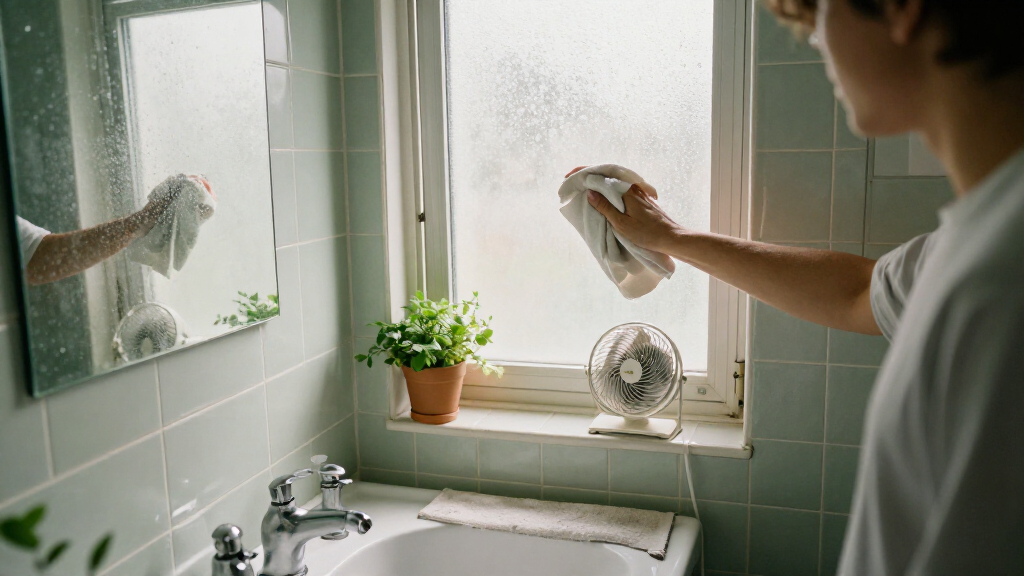
To keep a small bathroom from getting musty, run its exhaust fan during a shower and for about 20–30 minutes afterward. The fan pulls damp air out while the shower produces it, then keeps working on the steam left in the room. In a compact bathroom, that cloud has less space to spread out, so it can settle on a mirror, ceiling, towels, and cabinet doors.
Make the habit easy: switch the fan on before you turn on the water, and leave it running while you dry off. If you often forget, a timer or humidity-sensing control can help the fan continue after you leave. These controls are options, not magic fixes; the appropriate fan and installation depend on the room and local requirements.
A dusty grille can choke airflow. Clean it according to the fan maker’s instructions, and pay attention to how the room behaves: if the mirror stays fogged long after a shower or the fan sounds strained, it may not be moving enough air. Check whether its duct leads outdoors and is unobstructed. Don’t open electrical equipment while it is powered; if the fan or wiring needs repair, contact a qualified professional.
For example, after a quick morning shower, you might leave the fan on while you brush your teeth and get dressed, then let the timer finish its run. That small routine gives the damp air a clear exit instead of letting it linger like a wet blanket over the room.
Products Worth Considering

Bose TV Speaker (2nd Gen) Compact Soundbar with Bluetooth and HDMI

Dyson Ball Animal 3 Corded Upright Vacuum

eufy E25 Robot Vacuum and Mop Combo with HydroJet Roller Mop
As an affiliate, we earn on qualifying purchases.
Give fresh air a way into the bathroom
An exhaust fan works best when replacement air can enter the room. Close every gap and the fan may struggle to pull air through; leave a route in and damp air has a better chance of moving out. In a small bathroom, that route might be a door left ajar after bathing or the usual gap beneath the door.
If weather, privacy, and window design allow, open a window after a shower to help fresh air circulate. A window can be useful, but it does not always remove moisture as reliably as a working exhaust fan, particularly on still or humid days. Think of airflow as a loop: fresh air enters, the fan carries humid air away, and the room can start drying.
Try this after an evening shower: leave the bathroom door open while the fan runs, unless that would send humidity into a damp or poorly ventilated hallway. If the window is your only practical option, open it when outdoor conditions suit and check whether the room actually dries faster. Cold outdoor air, heavy rain, and privacy concerns can change what works.
Airflow should not come at the cost of safety or comfort. Keep doors and windows in the positions that make sense for your home, and follow the fan maker’s guidance. A musty smell can return when steam has no easy route out, so look at both ends of the air path—not just the switch on the wall.
Dry the shower, floor, and towels before they hold an odor
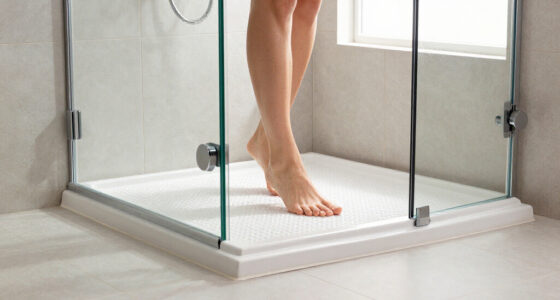
Drying wet surfaces and textiles removes the damp pockets where a musty smell can build. A squeegee clears water from shower walls and doors; a quick wipe handles puddles on the floor. Spread the shower curtain out after use instead of leaving it bunched in a dark, wet fold.
It takes only a minute to change the room’s drying pattern. After a shower, run a squeegee down the glass, wipe water from the sill, and hang your towel fully open. A towel dropped in a heap dries slowly, especially in a bathroom with little airflow. Give a bath mat space to dry between uses; if it stays damp underneath, hang it up or move it to a better-ventilated spot.
Wash towels, mats, and shower curtains according to their care labels when they smell damp or look soiled. How often depends on how many people use the bathroom and how quickly the items dry. A family’s busy shared bath may need more frequent washing than a guest bathroom used once a week. Do not assume a fabric item is clean just because its surface looks fine; the damp underside of a mat can keep an odor going.
Picture the usual morning rush: one person leaves a wet towel folded on a hook and another steps onto a soaked mat. Hang the towel wide and let the mat dry fully, and you remove two small odor traps before they become a larger problem. Drying beats covering the smell.
Clean the damp corners where grime and water collect
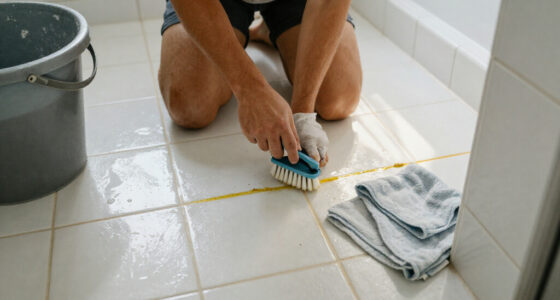
Clean and dry grout, caulk, drains, and toilet bases because soap residue and grime can cling to the same spots that stay damp. The floor behind a toilet or the edge of a shower may look like an afterthought, but a persistent odor often has a very ordinary hiding place. A regular wipe-down helps you notice changes before they become harder to trace.
Use a cleaner suited to the surface and follow its label; different tile, stone, grout, and fixture finishes can have different care needs. Avoid mixing cleaning products, and ventilate while you clean. Afterward, dry the area so water does not sit in seams or around the base of a fixture. If you spot cracked or peeling caulk, water may be getting behind it; replacing the seal can help, but first check that the underlying area is not already wet or damaged.
For example, if the floor smells musty every few days, clean around the toilet base and inspect the caulk line rather than repeatedly spraying the whole room with fragrance. Note whether a damp patch returns after you dry it. A recurring wet area calls for finding the water source, not simply scrubbing harder.
Cleanliness and dryness work together. A clean shower that stays wet can still smell stale, while dry surfaces covered in residue need attention too. Make a quick circuit of the room as you clean: check the drain, corners, grout, and the base of fixtures, then leave them dry and open to moving air.
Make cabinets and storage easier to air out
Reduce clutter and avoid storing damp items in a small bathroom so air can move around the things you keep there. Wet laundry in a basket, a dripping cleaning cloth under the sink, or bottles packed tightly against a wall can hold moisture where you will not notice it right away. A musty smell usually means moisture is lingering somewhere, and crowded storage can hide the clue.
Keep cleaning tools dry before putting them away, and move damp laundry to a better-ventilated place. Leave a little room around bottles and supplies so you can see the cabinet floor and wipe it. If the cabinet under the sink smells odd, take items out and check for dampness, stains, or a leak around the plumbing before putting them back.
Imagine reaching under the sink for toilet paper and finding a wet cloth tucked behind the bin. The cloth may be the whole problem—or it may have absorbed water from a slow drip. Dry the cloth elsewhere, wipe the cabinet, and check again later. That simple follow-up tells you more than another scented spray.
Storage should make the room easier to use without blocking airflow or hiding wet spots. You do not need to empty every shelf each day; just avoid packing damp objects into closed spaces and keep an eye on the places water could collect. A clear cabinet floor is easier to inspect and quicker to dry.
Follow a simple routine when you want the smell to stay gone
A reliable bathroom routine pairs ventilation, quick drying, and a regular check for recurring dampness. The order matters because each action helps the next: the fan removes humid air, open surfaces dry faster, and a quick inspection can reveal moisture that cleaning alone will miss. You can fit the routine into the few minutes after a shower.
- Before bathing: Turn on the exhaust fan so it catches steam as it forms.
- After bathing: Leave the fan running for about 20–30 minutes, with a door gap or suitable window opening to let replacement air in.
- Dry the obvious wet spots: Squeegee the shower, wipe standing water from the floor, spread out the curtain, and hang towels open.
- Reset the room: Let bath mats dry between uses, and move damp laundry or cleaning tools elsewhere.
- Check recurring trouble spots: Look under the sink, around the toilet, behind stored items, and near the shower for leaks, stains, or dampness.
On a rushed weekday, you might skip a full clean but still manage the first four steps in a few minutes. That can keep ordinary shower moisture from accumulating day after day. Make the final check part of your weekly tidy, or do it sooner whenever an odor returns in the same place.
A humidity monitor can help you notice that a room stays damp, and a moisture meter can help with troubleshooting. Neither one diagnoses mold or locates every leak. Treat readings as clues, then inspect what is around them and address the source of moisture.
Know when a musty smell points to a hidden water problem
If a musty smell persists after you improve ventilation and clean, look for hidden moisture rather than adding more fragrance. Check under the sink, around the toilet, behind stored items, and near the shower. Water stains, peeling caulk, recurring dampness, or a patch that keeps returning can point to a leak or moisture behind a surface.
A smell alone cannot confirm mold. Look for visible growth or water damage, but remember that a clean-looking surface does not rule out moisture hidden in a cabinet, wall, or floor. If a musty odor remains even after you dry the room, track where it seems strongest and whether it appears after a particular fixture is used. These details can help identify the problem.
A dehumidifier may help when humidity remains high and ventilation is limited, but it will not repair a leak or dry every wet building material. Use and maintain it according to its instructions. Air fresheners and candles can temporarily change how the room smells; they do not remove water. The odor is a signal to investigate, not a reason to keep layering scents.
Get professional help for a persistent leak, recurring dampness, suspected hidden growth, or visible growth over a large area. A qualified professional can assess damage you cannot safely reach or clean. For example, if the cabinet floor turns damp again a day after you dry it, stop treating that as a housekeeping issue and find out where the water is coming from.
Frequently Asked Questions
How long should I leave the bathroom fan running?
Run it during the shower and for about 20–30 minutes afterward as a useful rule of thumb. A timer or humidity-sensing control can help if you tend to forget. Keep the grille clean so dust does not restrict airflow.
Why does my bathroom smell musty even though I clean it?
Cleaning may miss the moisture source: a damp towel or mat, a dirty fan grille, water behind damaged caulk, a slow leak, or a poorly ventilated cabinet. Dry the room and check the spots where water can collect. If the odor persists, investigate for hidden moisture rather than adding fragrance.
Will opening a window prevent mustiness?
Opening a window can help when the weather, privacy, and outdoor air make it practical. It may not clear shower steam as reliably as a working exhaust fan, especially in still or humid conditions. Use the option that actually helps the room dry.
Does a dehumidifier help in a small bathroom?
It can help when humidity stays high and ventilation is limited, but it will not fix a leak or remove moisture trapped in building materials. Follow the unit’s instructions and keep it clean. If dampness keeps returning, find the source.
How can I tell whether a musty smell means mold?
A smell alone cannot confirm mold. Look for visible growth, water stains, or recurring dampness, while remembering that hidden moisture may not be visible. If you suspect growth behind a surface or the odor persists after you improve ventilation, consider professional help.
Can I use air freshener or a scented candle to solve the odor?
They can change the smell temporarily, but they do not remove the moisture causing it. Dry wet fabrics and surfaces, run the fan, and check for leaks if the odor returns. Fragrance works on the nose; ventilation works on the damp air.
Conclusion
Keep the room moving toward dry: run the fan, give fresh air a route in, and spend a minute clearing water from the shower, floor, and fabrics. If the smell keeps returning, inspect for a leak or hidden dampness instead of masking it. A small bathroom can feel fresh without smelling like a candle aisle; let clean air and dry surfaces do the work.