TL;DR

Get cleaning gear delivered free — and shop member deals
- Fast, free delivery on millions of items
- Access to Prime Big Deal Days deals on October 6–7
- Prime Video, Amazon Music and more included
Cleaning a wooden cutting board safely means washing it immediately after use, drying thoroughly, disinfecting periodically with natural agents, and oiling regularly. These steps prevent bacteria buildup, warping, and cracks, extending its lifespan.
Imagine slicing juicy tomatoes or chopping spicy garlic on a wooden board that’s been neglected. Not only does grime build up, but bacteria can hide in tiny pores, risking your health. But with a few simple habits, you can keep your wooden cutting board clean, safe, and looking good for years.
This guide walks you through the essential steps—what to do daily, periodically, and seasonally—to protect your food, preserve your board, and avoid common mistakes. Let’s make cleaning your wooden board a quick, natural routine that actually works.
Always wash your wooden board immediately after use with hot water and mild soap.
Dry the board thoroughly to prevent mold, warping, or splitting.
Use natural disinfectants like vinegar, lemon, or baking soda periodically to eliminate bacteria and odors.
Oiling your board monthly with food-grade mineral oil keeps it durable and resistant to cracks.
Avoid soaking or putting your board in the dishwasher—moisture is your enemy.
Quick Daily Cleaning That Keeps Bacteria at Bay
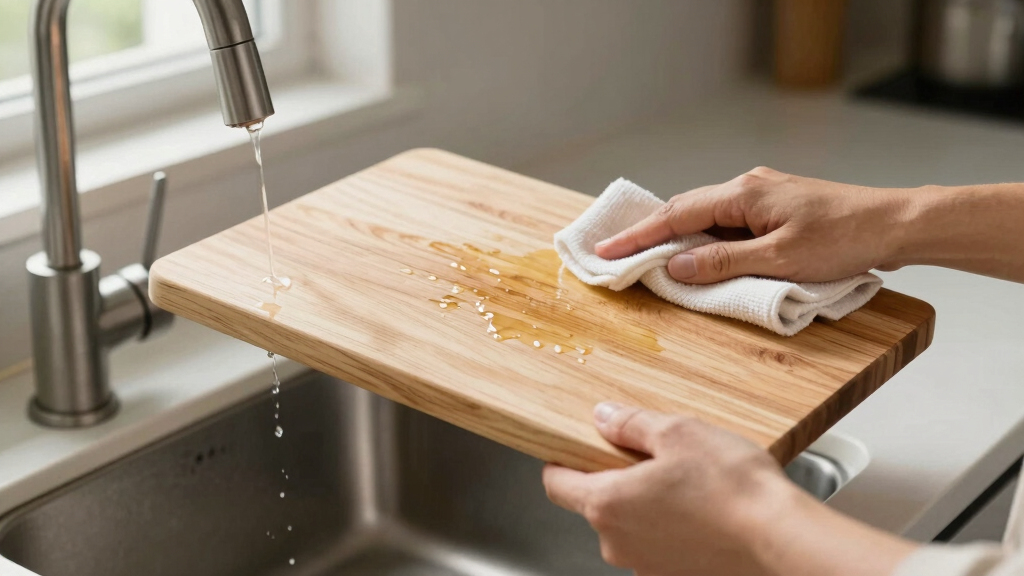
After every use, rinse your wooden board with hot water and a splash of mild dish soap. Scrub gently with a soft brush or sponge to remove food particles. For example, if you’ve just chopped chicken and veggies, this quick rinse helps wash away bacteria before they settle in.
Dry immediately with a clean towel or let it air dry completely before storing. Moisture is the enemy—water lurking in pores invites mold or warping. Think of it like drying a paintbrush—thorough drying keeps it in shape.
wooden cutting board cleaning brush
As an affiliate, we earn on qualifying purchases.
As an affiliate, we earn on qualifying purchases.
How to Deep Clean and Disinfect Naturally
- Sprinkle coarse salt over the surface.
- Use half a lemon to scrub in circular motions, pressing down firmly.
- Rinse with hot water and dry thoroughly.
natural disinfectant for cutting boards
As an affiliate, we earn on qualifying purchases.
As an affiliate, we earn on qualifying purchases.
Why Oiling Keeps Your Board Healthy and Long-Lasting
Regular oiling is the secret to a durable, crack-resistant wooden board. Use food-grade mineral oil or beeswax—avoid vegetable oils that turn rancid. For example, after a thorough clean, apply a generous coat of oil, letting it soak into the fibers for a few hours or overnight. This process isn’t just about appearance; it’s about maintaining the integrity of the wood. Properly oiled wood is less porous, which means fewer places for bacteria to hide and less chance of cracking or splitting over time. The oil fills the microscopic pores, creating a moisture barrier that prevents water from seeping in during use or cleaning. This is crucial because water exposure is the primary cause of warping and cracking—compromising the board’s structural integrity and safety. Think of it like a moisturizer for your skin—keeps it soft, flexible, and less prone to damage. Oiling once a month is enough for most boards, especially if they see frequent use. Neglecting this step accelerates wear and reduces the lifespan of your investment, making regular maintenance essential for long-term durability.
As an affiliate, we earn on qualifying purchases.
Common Mistakes That Damage Your Wooden Cutting Board
Many people soak their boards in water or put them in the dishwasher, thinking it’s cleaning. But prolonged water exposure causes warping and splitting because wood absorbs moisture, which then expands and contracts, weakening its structure. Also, using steel wool or harsh chemical cleaners can scratch or degrade the surface, making it more susceptible to bacteria infiltration and damage. For example, a homeowner left a board soaking overnight. The next day, it was warped and cracked because of the excess moisture. Remember—keep it dry and gentle. Your board’s lifespan depends on avoiding these pitfalls. Proper care involves quick washing, thorough drying, and periodic maintenance, not prolonged soaking or aggressive scrubbing, which compromise the wood’s natural defenses and structural integrity.
As an affiliate, we earn on qualifying purchases.
Comparison Table: Natural vs. Chemical Cleaning Methods
| Method | Effectiveness | Safety | Best For |
|---|---|---|---|
| Vinegar/Hydrogen Peroxide | High; disinfects naturally | Very safe when rinsed thoroughly | Regular sanitation |
| Salt & Lemon | Moderate; removes odors & stains | Safe and natural | Weekly deep cleaning |
| Commercial Cleaners | Variable; may contain harsh chemicals | Depends on product; often less safe | Rarely necessary |
How Often Should You Oil and Maintain Your Board?
Oiling once a month keeps your board in top shape. If you notice it’s dull, dry, or stained, it’s time for a fresh coat. After cleaning and drying, apply a thin layer of food-grade mineral oil with a cloth, then let it soak in for a few hours. This routine ensures the wood remains supple and less prone to cracking, especially in dry environments or during seasonal changes when wood tends to dry out faster. Regular maintenance also helps prevent the development of surface cracks that can harbor bacteria or compromise the board’s integrity. Think of it as giving your board a mini spa day—simple, quick, and worth the effort, because a well-maintained board not only lasts longer but also provides safer food prep.
Frequently Asked Questions
Can I put my wooden cutting board in the dishwasher?
No. The high heat and water pressure can warp or crack the wood, ruining your board. Stick to hand washing with hot water and soap instead.
How often should I oil my wooden cutting board?
Oiling once a month is a good rule of thumb. If the wood looks dry or dull, give it an extra coat. Regular oiling keeps the surface smooth and prevents cracks.
What’s the best way to remove stubborn stains or odors?
Scrubbing with coarse salt and lemon or baking soda is effective and natural. Let the mixture sit for a few minutes before rinsing thoroughly.
Is it safe to disinfect with vinegar or hydrogen peroxide?
Yes, both are safe natural disinfectants when used properly. Rinse well after application to remove any residues and avoid prolonged soaking.
How can I prevent my board from cracking or warping?
Keep it dry, don’t soak it, and oil regularly. Avoid extreme temperatures and direct sunlight to extend its life.
Conclusion
Keeping your wooden cutting board safe and long-lasting doesn’t require fancy products or complex techniques. It’s about consistent, gentle care—washing, drying, disinfecting, and oiling. With these simple habits, your board becomes a trusty kitchen partner for years to come.
Think of it like caring for a good friend: a little attention goes a long way. Your board will reward you with safe, beautiful service—cutting, chopping, and preparing meals with confidence.
Halloween Picks
halloween
As an affiliate, we earn on qualifying purchases.