
TL;DR

Get cleaning gear delivered free with Prime
- Fast, free delivery on millions of items
- Prime Video, Amazon Music and more included
- Member-only deals all year
Cleaning vinyl siding safely means using mild detergents, soft tools, and low-pressure water. Regular, gentle maintenance prevents damage and keeps your home looking sharp. Avoid harsh chemicals and high-pressure washers for best results.
Your home’s exterior is constantly exposed to dirt, mold, and weather. Cleaning vinyl siding might seem straightforward, but using the wrong tools or chemicals can damage it permanently. The good news? You don’t need harsh scrubbing or aggressive pressure to restore its shine.
In this guide, you’ll learn how to safely clean your vinyl siding — from choosing the right solutions to using the proper equipment. Protect your investment and keep your home looking its best with simple, proven techniques.
Always use a gentle cleaning mix — water, mild soap, or vinegar — to protect vinyl siding from discoloration or warping.
Choose soft brushes and a garden hose with low pressure to avoid scratches and dents.
Work from bottom to top during cleaning to prevent streaks and ensure thorough rinsing.
Avoid harsh chemicals, solvents, and high-pressure washers that can cause irreparable damage.
Regular maintenance and early intervention prevent mold buildup and prolong siding lifespan.
Use Gentle Cleaning Solutions That Won’t Damage Your Siding
Vinyl siding reacts badly to harsh chemicals like bleach or abrasive cleaners, which can cause discoloration or deterioration. Instead, opt for a mix of water and a mild detergent or a specialized vinyl siding cleaner. Imagine a gentle sponge bath for your siding, not a scrub with steel wool.
For stubborn stains or mold, a solution of water, a splash of white vinegar, or a mild soap often does the trick. An example? When your siding develops greenish algae from humidity, a mix of water and vinegar can wipe it out without harming the surface.
Always test a small area first to make sure the cleaner doesn’t cause discoloration. This prevents surprises and keeps your siding safe.
Choosing gentle, environmentally friendly cleaning solutions is essential because they help preserve the siding’s protective finish and prevent long-term damage. Harsh chemicals may seem effective initially but can weaken the material over time, leading to costly repairs or replacement. The tradeoff is clear: safe, mild cleaners may require a little more time and effort, but they safeguard the longevity and appearance of your siding, ensuring your investment pays off in the long run.
As an affiliate, we earn on qualifying purchases.
Pick the Right Tools to Avoid Scratches and Dents
Using the right tools makes all the difference. Soft-bristled brushes, microfiber cloths, or non-abrasive sponges are perfect for scrubbing away dirt without scratching. Think of it like washing a delicate piece of jewelry — gentle is key.
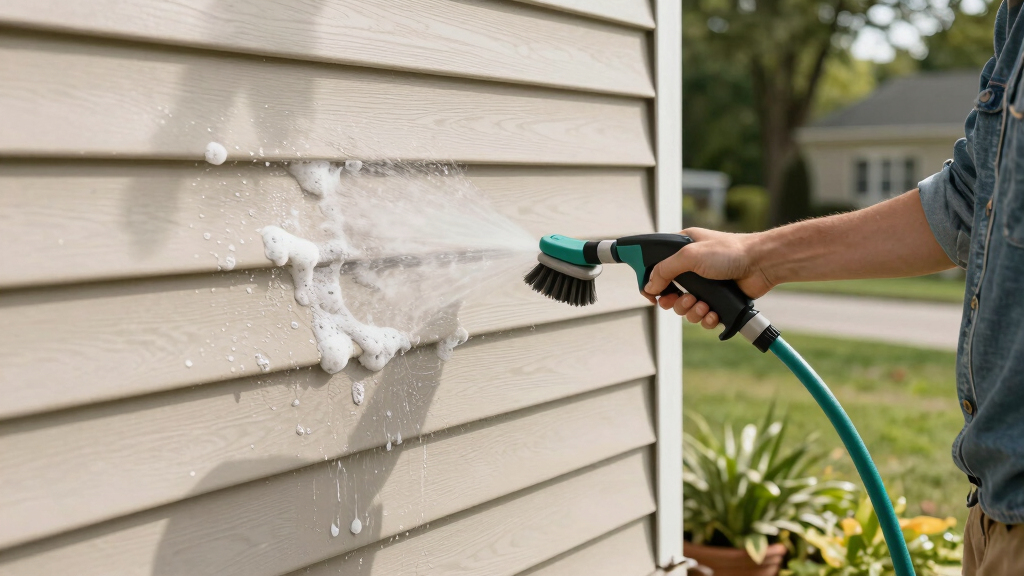
When rinsing, a garden hose with a spray nozzle works best. Keep the pressure low, aiming the water from top to bottom to avoid streaks. High-pressure washers are tempting, but they can cause cracks or loosen panels if used carelessly.
Imagine washing your car’s paint with a gentle stream instead of a power washer — the same idea applies here. The reason is that vinyl siding is designed to withstand weather, but aggressive tools can cause micro-tears or dents that compromise its integrity, leading to costly repairs or early replacement. Using soft tools and gentle rinsing preserves the siding’s structure, maintains its appearance, and prolongs its lifespan. The tradeoff is that these gentle methods may take a bit longer but offer a much safer and more effective cleaning process in the long run.
As an affiliate, we earn on qualifying purchases.
How to Safely Use Water and Pressure for Cleaning
- Start with a thorough rinse from top to bottom using a low-pressure spray to loosen dirt and debris. This prevents dirt from settling deeper into the siding or being pushed into seams.
- Mix your cleaning solution as recommended — usually water with a small amount of soap or vinegar. Proper mixing ensures the cleaning agents are effective yet gentle enough not to damage the siding’s surface or protective coating.
- Apply the solution with a soft brush or sponge, working from bottom to top to prevent streaks and ensure even coverage. Working from bottom to top helps gravity assist in rinsing away dirt and prevents streaks caused by soap running downward.
- Rinse again from top to bottom, ensuring all soap residue is washed away. Residual soap or cleaner can leave streaks or attract dirt if not thoroughly rinsed, diminishing the siding’s appearance over time.
- For stubborn stains, repeat the process or use a gentle scrubber, avoiding excessive pressure. Excessive force can damage the siding’s surface or loosen panels, leading to costly repairs. Patience and gentle scrubbing are key to maintaining siding integrity while achieving a clean look.
This step-by-step ensures a thorough clean without risking damage. Remember, patience beats force when it comes to vinyl siding. The tradeoff for patience is a longer-lasting, damage-free finish that keeps your home looking pristine for years.
As an affiliate, we earn on qualifying purchases.
Frequently Asked Questions
Can I use a pressure washer on vinyl siding?
You can, but only with low pressure and from a safe distance (around 12-18 inches). High-pressure washers risk cracking or loosening panels. Always test a small area first and keep the nozzle moving steadily.
What’s the safest way to remove mold from vinyl siding?
Mix water with a splash of white vinegar or a mild detergent. Apply with a soft brush or sponge, then rinse thoroughly. This approach kills mold without damaging the siding surface.
How often should I clean my vinyl siding?
Once or twice a year is usually enough, but in humid climates or shady spots, more frequent cleaning can prevent mold and algae buildup.
Are there cleaning products I should avoid?
Yes. Steer clear of bleach, abrasive scrubbers, solvents, or any harsh chemicals. These can strip color, cause discoloration, or weaken the siding over time.
Can I clean vinyl siding during winter?
It’s best to wait until temperatures are above freezing. Water can freeze on the siding or in crevices, leading to damage or ice buildup that’s hard to remove.
As an affiliate, we earn on qualifying purchases.
Conclusion
Keeping your vinyl siding clean doesn’t mean risking damage. Gentle tools, mild solutions, and a careful touch are all you need. Think of your siding as delicate fabric — treat it with respect, and it will keep your home looking fresh for years.
Next time you give your house a spa day, remember: patience and gentle methods are your best friends. Your siding, and your wallet, will thank you.
Halloween Picks
halloween
As an affiliate, we earn on qualifying purchases.