
TL;DR

Get cleaning gear delivered free with Prime
- Fast, free delivery on millions of items
- Prime Video, Amazon Music and more included
- Member-only deals all year
Prompt pre-treatment with natural or commercial agents can lift sweat stains from white shirts. Using methods like hydrogen peroxide, baking soda, and proper washing techniques restores whiteness and freshness efficiently.
Nothing ruins a crisp white shirt faster than stubborn sweat stains. That yellowish discoloration seems to appear out of nowhere, especially after a long day. But don’t worry — with the right techniques, you can banish those stains and keep your whites looking bright.
This guide walks you through practical, safe, and eco-friendly methods to remove sweat stains. Whether you’re dealing with fresh marks or old, set-in stains, you’ll find simple solutions that actually work.
Treat sweat stains as soon as possible, ideally immediately after they happen.
Use natural solutions like baking soda paste, vinegar soak, or hydrogen peroxide spray for safe, effective cleaning.
Always check fabric care labels and wash in hot water if safe, adding stain boosters for stubborn stains.
Preventative habits like applying antiperspirant at night and wearing undershirts greatly reduce stain formation.
Old stains may need a combination of treatments and patience to fully lift.
Why Sweat Stains Turn Yellow and How to Prevent Them
Sweat stains turn yellow because of the proteins and salts in sweat reacting with fabric fibers over time. This chemical reaction causes the discoloration that becomes more noticeable as the stain ages, especially if left untreated. The yellowing is not just a cosmetic issue; it indicates that the stain has bonded deeply with the fabric, making removal more difficult.
Understanding this process highlights why early intervention is crucial. The longer a stain sits, the more it penetrates the fibers, requiring more aggressive or multiple treatments to remove. Preventative measures, such as applying antiperspirant properly and washing shirts promptly, help minimize the chemical reactions and prevent the stain from setting in permanently. Essentially, early treatment reduces the need for harsh chemicals and preserves the fabric’s integrity, extending the lifespan of your shirts.
Choosing effective prevention strategies and acting quickly when stains occur can mean the difference between a white shirt that looks new and one that’s permanently discolored. Think of it as a tradeoff: investing a few moments to treat stains early can save time, effort, and money in the long run.
hydrogen peroxide stain remover for white shirts
As an affiliate, we earn on qualifying purchases.
As an affiliate, we earn on qualifying purchases.
The Best Natural Ways to Remove Sweat Stains from White Shirts
Natural remedies are not only safe and inexpensive but also work by targeting the root causes of sweat stains—proteins, salts, and mineral deposits—without harsh chemicals. For example, baking soda acts as a gentle abrasive and pH balancer, breaking down stains and neutralizing odors. Vinegar’s acetic acid dissolves mineral deposits and helps prevent future buildup, while hydrogen peroxide’s mild bleaching effect can lift discoloration without damaging delicate fabrics. Understanding how these substances interact with stains allows you to choose the most effective treatment based on the stain’s age and severity.
For instance, using a baking soda paste immediately after a workout can prevent the stain from setting, while soaking in vinegar can loosen older, more stubborn deposits. Hydrogen peroxide is particularly useful for whitening and brightening, but overuse or improper application can weaken fibers or cause uneven discoloration if not used carefully. Knowing the chemistry behind these remedies helps you apply them judiciously, balancing effectiveness with fabric safety. This deeper understanding empowers you to customize treatments and avoid unnecessary damage, ensuring your white shirts stay bright and intact over time.
As an affiliate, we earn on qualifying purchases.
How to Use Cleaning Agents Effectively — A Step-by-Step Guide
Removing sweat stains isn’t about magic — it’s about technique. Here’s a simple sequence:
- Identify the stain: Confirm the yellowed area on your white shirt.
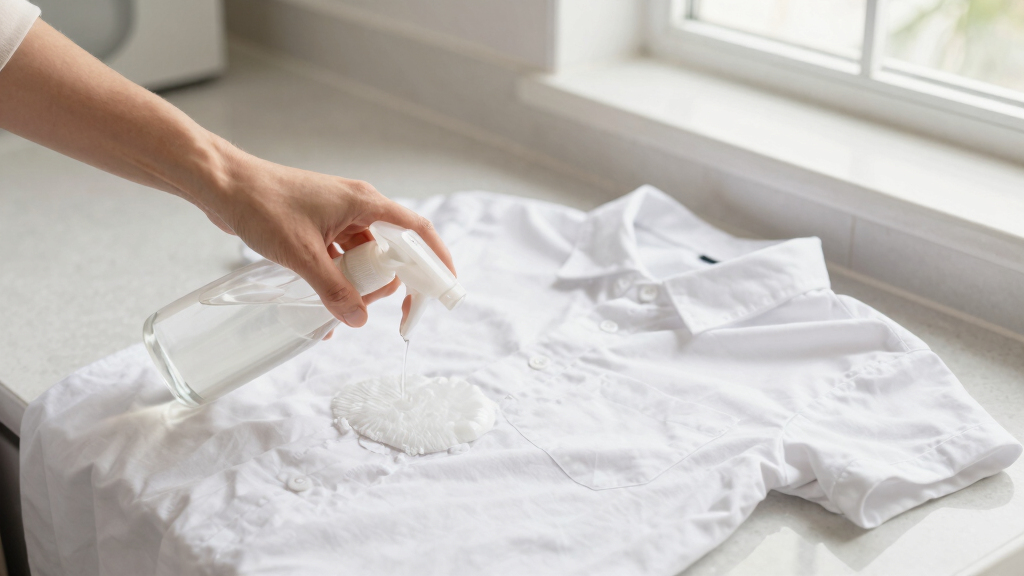
- Pre-treat immediately: Use a natural solution like baking soda paste or spray hydrogen peroxide onto the stain. Acting promptly prevents the stain from bonding more deeply with the fabric, making removal easier and more effective.
- Let it sit: Give it 15-30 minutes for the solution to penetrate and break down the stain components. This waiting period is critical because it allows the active ingredients to work at a molecular level, loosening proteins and mineral deposits that cause discoloration.
- Wash in hot water: If the fabric care label permits, wash in the hottest water safe for the shirt, adding a booster like oxygen bleach if needed. Hot water helps dissolve and rinse away residual stain particles, but overuse can weaken fibers—so always check the label.
- Check before drying: Examine the shirt after washing to ensure the stain is gone. Heat from a dryer can set any remaining stain permanently, so air-drying or checking before drying is essential to avoid re-staining.
This process emphasizes the importance of timing, temperature, and thoroughness. Proper pre-treatment and washing techniques work together to maximize stain removal while preserving fabric quality. For example, a white shirt stained after a gym session benefits from this routine, preventing the stain from becoming ingrained.
As an affiliate, we earn on qualifying purchases.
Compare Natural and Commercial Stain Removers — Which Works Best?
| Feature | Natural Remedies | Commercial Products |
|---|---|---|
| Effectiveness on old stains | Moderate; best on fresh stains, as natural remedies rely on chemical reactions that are most effective before stains set deeply. They can be less effective on heavily ingrained or old stains, which may require repeated treatments or stronger agents. This limitation underscores the importance of acting quickly and choosing the right remedy based on stain age. | High; especially enzyme-based formulas designed to break down proteins and salts in sweat, making them highly effective on stubborn, set-in stains. They can often restore whiteness even after stains have dried for a long time, but they may be harsher on delicate fabrics. |
| Safety for fabrics | Very safe; gentle on fibers and suitable for most fabrics, especially when used as directed. Natural remedies reduce the risk of damage or discoloration caused by harsh chemicals, extending the lifespan of your shirts. | Generally safe; but always check labels. Some commercial products contain strong enzymes or bleaching agents that, if misused, could weaken or discolor fabrics over time. Proper application and adherence to instructions are key to avoiding damage. |
| Cost | Low; ingredients like baking soda, vinegar, and hydrogen peroxide are inexpensive and often already in your home, making this an economical choice for regular maintenance and quick fixes. | Variable; usually more expensive, especially specialized stain removers. While they can be cost-effective for stubborn stains, regular use may add up, especially if multiple treatments are needed. |
| Ease of use | Simple, DIY solutions that require basic mixing and application. They allow for customization based on stain severity and fabric type, giving you control over the process. | Quick, ready-to-use sprays or washes that save time but may lack the flexibility of natural remedies. They are ideal for on-the-go stain treatment but might not be suitable for all fabric types or older stains. |
| Environmental impact | Minimal; natural ingredients are biodegradable and produce fewer pollutants, making them a sustainable choice for eco-conscious consumers. | Depends on formulation; some contain environmentally friendly ingredients, but others include chemicals that can harm aquatic life or contribute to pollution if not disposed of properly. |
Natural options like baking soda and vinegar are gentle, eco-friendly, and suitable for routine maintenance, especially on fresh stains. Commercial products, on the other hand, are formulated to tackle stubborn, old, or ingrained stains with enzymes and specialized compounds. Understanding these nuances helps you choose the most effective and sustainable solution for your specific needs, balancing environmental considerations with stain severity.
As an affiliate, we earn on qualifying purchases.
Frequently Asked Questions
How can I remove old, set-in sweat stains from my white shirts?
For older stains, soak the shirt in a mixture of hydrogen peroxide and water, then apply a baking soda paste before washing in hot water. This combination works by breaking down the proteins and mineral deposits that have bonded with the fabric over time. Repeat the process if necessary, as stubborn stains often require multiple treatments. Patience is key; over time, these methods can significantly lighten or even completely remove set-in stains, restoring your shirt’s whiteness and freshness.
Are there safe methods for delicate fabrics?
Yes, for delicate fabrics, use diluted vinegar or specially formulated gentle stain removers. Always perform a patch test on an inconspicuous area before applying to the entire stain to ensure no damage or discoloration occurs. These gentle methods work by breaking down stain components without compromising fabric integrity, allowing you to maintain the appearance and longevity of delicate shirts while effectively removing sweat stains.
Can I use bleach to remove sweat stains?
Chlorine bleach can whiten whites effectively but poses risks of weakening fibers or causing yellowing if used improperly. It’s best reserved for heavily soiled, bleach-safe fabrics and used sparingly. Oxygen-based bleaches or color-safe whiteners are safer alternatives, especially for frequent use, as they lift stains without damaging fibers or altering fabric color. Understanding these tradeoffs helps you choose the safest, most effective whitening method for your shirts.
What’s the best way to prevent sweat stains?
Prevention involves proactive habits: applying antiperspirant at night allows it to work more effectively; wearing undershirts creates a barrier that absorbs sweat before it reaches your outer shirt; washing shirts promptly after wear prevents stains from setting; choosing moisture-wicking fabrics reduces sweat accumulation; and limiting spicy foods or caffeine can decrease excessive sweating. Combining these practices minimizes the chemical reactions that cause stains, helping your shirts stay bright and clean longer.
Are natural remedies as effective as commercial stain removers?
Natural remedies like baking soda, vinegar, and hydrogen peroxide are effective on fresh stains due to their ability to neutralize odors and break down proteins and salts. However, when dealing with old or heavily ingrained stains, commercial enzyme-based products often outperform natural solutions because they are specifically formulated to target stubborn residues. Using a combination—natural remedies for early treatment and commercial products for tough stains—can provide the best overall results, balancing safety, effectiveness, and environmental impact.
Conclusion
Keeping your white shirts spotless isn’t about harsh chemicals or complicated tricks — it’s about acting fast and choosing the right method. A quick pre-treatment with a natural solution can turn stubborn stains into faint memories. Remember, consistent care preserves your wardrobe’s brightness and freshness.
Next time sweat stains threaten your whites, picture a simple routine: treat, wash, and dry with care. That vivid white shirt can still shine — you just need the right approach.
Halloween Picks
halloween
As an affiliate, we earn on qualifying purchases.