TL;DR

Get cleaning gear delivered free with Prime
- Fast, free delivery on millions of items
- Prime Video, Amazon Music and more included
- Member-only deals all year
Dust on high shelves can harbor allergens and pollutants. Regular, safe dusting with extendable tools and proper techniques keeps your space cleaner and improves air quality. Using the right tools makes the task easier and safer.
High shelves often hide a layer of dust you barely notice—until you see it swirling when you turn on the light. It’s easy to forget those towering spaces, but dust buildup here can affect your air quality and the longevity of your stored items. The good news? You don’t need fancy equipment or a professional crew. With simple tools and a little technique, you can keep those high spots clean and dust-free.
In this guide, you’ll learn how to safely reach those tricky shelves, the best tools for the job, and practical tips to prevent future dust buildup. Whether you’re dealing with a towering bookcase or a high kitchen shelf, these straightforward steps will make dusting high places easier and safer.
Use a sturdy, stable ladder or stool—never overreach or stand on furniture—when reaching high shelves.
Extendable microfiber dusters and vacuum attachments are the most effective tools for safe, thorough dust removal.
Dust high shelves every 1-3 months, especially if you have pets or allergies, to prevent buildup.
Removing fragile items before dusting prevents accidents and damage.
Maintaining low humidity and using air purifiers helps reduce dust accumulation over time.
How to Get Rid of Dust on High Shelves
High shelves quietly collect allergens, pet dander and pollutants. A safe setup, an extendable tool and a top-down routine can clear the buildup without spreading it through the room—or putting you at risk of a fall.
Long reach, strong dust pickup and less need to climb.
Clean monthly when pets, allergies or visible buildup are present.
Use a stable ladder on a flat surface—never furniture.
Typical extendable range
Between routine cleanings
Balanced indoor range
Prevents repeat work
What actually works up high
Use tools that trap or capture particles rather than simply pushing dust into the air. Remove fragile objects first, then match the tool to the surface and type of buildup.
Extendable microfiber duster
Static charge helps trap dust instead of scattering it. The long handle reduces climbing and makes it easy to sweep broad shelves safely.
Vacuum with soft brush
Useful for stubborn particles and quick cleanup. A gentle brush lifts dust while suction keeps it from becoming airborne.
Compressed air
Reaches corners and delicate details other tools miss. Use short bursts after removing loose objects, and capture displaced dust below.
| Tool | Reach | Dust pickup | Ease of use | Best application |
|---|---|---|---|---|
| ✓ Extendable microfiber | 6–8 ft | High | Easy | Bookshelves and broad surfaces |
| ✓ Vacuum + brush | Variable | Good | ~ Moderate | Stubborn dust and particle capture |
| ~ Compressed air | Limited | Excellent in corners | ~ Moderate | Crevices and intricate objects |
| Damp microfiber cloth | ✗ Hand reach | High on residue | ~ Requires access | Sticky grime after dry dusting |
A safe, top-down sequence
Preparation prevents broken objects, repeat cleaning and unstable movements. Keep your body centered over the ladder and reposition it whenever the work moves beyond comfortable reach.
Stabilize the setup
Wear sturdy shoes. Place a step ladder with a wide base on a flat, dry surface and confirm every foot is secure.
Clear fragile items
Remove decorations, glassware and unstable stacks. Clean delicate pieces separately before setting them aside.
Capture dust top-down
Sweep gently with microfiber, starting at the highest point. Follow with a vacuum brush where particles remain.
Finish and reset
Use a barely damp cloth for sticky residue. Let the shelf dry, then replace items carefully with less clutter.
Clean before buildup gets stubborn
Frequent light cleaning requires less effort than occasional deep cleaning. It also limits the amount of settled material that becomes airborne when the shelf is disturbed.
Match frequency to the room
Pets, allergies, open windows and busy kitchens usually call for more frequent attention.
Pets or allergies
Clean about once a month to limit dander and allergen buildup.
Grease-prone rooms
Kitchen dust can bind to residue, so catch it before it becomes sticky.
Low-traffic rooms
A seasonal check is often enough when doors and windows remain closed.
Visible dust or odors
Clean sooner when surfaces look gray or particles appear in angled light.
Keep the room balanced
Small habits create a cleaner cycle
Stop thick layers before they form.
Use an air purifier and clean filters monthly.
Keep indoor moisture near 40–50%.
Fewer objects mean fewer dust-catching edges.
High-shelf dusting FAQ
What is the safest way to reach high shelves?
Use a sturdy step ladder or stable stool on an even surface. Check stability before climbing, keep your body centered and never stand on furniture.
Can I use cleaning sprays?
Yes, but use them sparingly. Spray a microfiber cloth rather than the overhead shelf, and test the solution on a hidden area first.
Should books and decorations be removed?
Remove fragile pieces and unstable stacks. Clearing a tall bookcase also makes the shelf faster to clean and protects stored items from accidental damage.
How can I prevent dust from returning quickly?
Use an air purifier, maintain 40–50% humidity, clean filters monthly, reduce shelf clutter and follow a consistent one-to-three-month schedule.
The safest way to reach high shelves without risking a fall
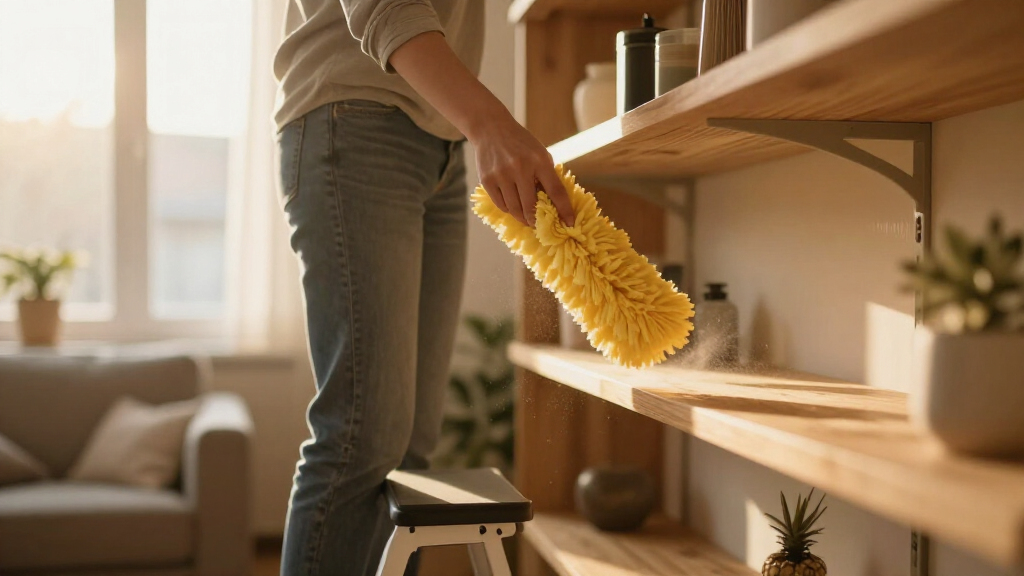
Reaching high shelves requires stability and caution. The simplest approach? Use a sturdy step ladder or a stable stool. Avoid standing on furniture or overreaching—these are common causes of falls and injuries. For example, a well-balanced step stool with a wide base keeps you secure while you dust.
Always place your ladder on a flat, even surface. If you need to stretch, do so gradually, ensuring you maintain your balance. Never lean too far over the edge—stability is key to avoiding accidents. Remember, safety comes first when tackling those towering shelves.
extendable microfiber duster for high shelves
As an affiliate, we earn on qualifying purchases.
As an affiliate, we earn on qualifying purchases.
The best tools for dusting high shelves—what actually works
Getting dust off high shelves is easiest with tools designed for reaching and trapping dust. Here’s what works best:
- Extendable microfiber dusters: These reach 6-8 feet and trap dust with static charge, reducing scatter. Their design allows you to clean from a safe distance, minimizing the risk of falls and overreaching. The static charge helps gather dust quickly, which means less time spent and fewer trips up and down the ladder.
- Vacuum with brush attachment: Great for quick cleanups, especially if you want to avoid knocking over items. Using a vacuum with a gentle brush reduces the risk of disturbing fragile objects and allows you to efficiently remove dust without spreading it into the air.
- Compressed air: Ideal for blasting dust out of corners or tight spots, especially on delicate or fragile items. It can reach into crevices that other tools might miss, ensuring thorough cleaning. However, it should be used carefully to avoid dislodging fragile objects or creating a mess.
For example, using an extendable microfiber duster on a high bookshelf can remove dust in seconds without the need for moving heavy furniture or risking a fall. Pair it with a gentle vacuum brush for stubborn spots. This combination balances safety with efficiency, ensuring you remove dust thoroughly without unnecessary risks.
vacuum attachment for dusting high places
As an affiliate, we earn on qualifying purchases.
As an affiliate, we earn on qualifying purchases.
How often should you dust high shelves? The surprising truth
Dust on high shelves should be tackled every 1-3 months, depending on your household. But why does frequency matter? Regular dusting prevents thick layers from forming, which can trap allergens and pollutants more deeply, making cleaning more difficult over time. When dust accumulates, it can become a breeding ground for mold, bacteria, and pests, which can negatively impact your health and the integrity of stored items.
Moreover, the longer dust sits, the more it becomes airborne during cleaning, increasing exposure risks for allergy sufferers or those with respiratory issues. Frequent dusting also reduces the effort needed for each cleaning session; catching dust early means less scrubbing and less time spent on deep cleaning later. Finding a consistent schedule helps maintain healthier indoor air quality and preserves the condition of your belongings.
sturdy step ladder for cleaning high shelves
As an affiliate, we earn on qualifying purchases.
As an affiliate, we earn on qualifying purchases.
Comparison table: Dusting tools for high shelves — pros and cons
| Tool | Reach | Dust Pickup | Ease of Use |
|---|---|---|---|
| Extendable microfiber duster | 6-8 ft | High | Easy |
| Vacuum with brush | Variable | Good | Moderate |
| Compressed air | Limited | Excellent for corners | Moderate |
As an affiliate, we earn on qualifying purchases.
Step-by-step: How to clean high shelves without making a mess
- Wear sturdy shoes or boots for safety. Place your ladder on an even surface.
- Remove fragile or decorative items carefully, placing them aside.
- Use an extendable microfiber duster to sweep dust off the shelves, starting from the top down.
- If needed, follow up with a vacuum brush attachment to catch stubborn dust particles.
- Wipe the shelves with a damp microfiber cloth if there’s sticky grime or residue.
- Replace items gently, avoiding knocking over other objects.
For example, when cleaning a tall bookcase, removing books first makes dusting easier and prevents knocking over stacks. Taking this approach reduces the risk of accidental damage and helps you work more efficiently.
Prevent future dust buildup—simple habits that work
Keeping dust at bay requires a bit of routine. Regular dusting, every 1-3 months, stops dust from piling up and becoming harder to remove. Using an air purifier in the room helps trap airborne dust particles before they settle, which is especially beneficial for allergy sufferers or homes with pets. Maintaining low humidity—around 40-50%—also plays a critical role, as higher humidity can encourage dust to settle and stick around longer. Conversely, too low humidity may cause other issues like dry skin or static electricity, so balancing humidity is key.
Imagine your home as a garden: watering (cleaning) regularly prevents weeds (dust) from taking over. Small daily habits, like wiping down surfaces and avoiding clutter, help keep dust levels manageable. These habits reduce the workload over time, creating a cleaner, healthier environment with less frequent deep cleaning sessions.
Frequently Asked Questions
What is the safest way to reach high shelves?
The safest way is to use a sturdy, stable step ladder or stool placed on an even surface. Avoid standing on furniture or overreaching—these are common causes of falls. Always check your ladder’s stability before climbing.
What tools are best for dusting high shelves?
Extendable microfiber dusters, vacuum with brush attachments, and compressed air cans are your best options. They reach far, trap dust effectively, and minimize knocking over items or risking falls.
How often should I dust high shelves?
Every 1-3 months is ideal, depending on household conditions. Pet owners and allergy sufferers may need to clean more frequently, around once a month, to keep dust levels low.
Can I use cleaning sprays on high shelves?
Yes, but sparingly. Often, dry dusting with a microfiber duster or vacuum is enough. If you do use sprays, test in a small, hidden spot first to avoid damage or residue.
How do I prevent dust buildup on high shelves?
Regular dusting, maintaining low humidity, and using air purifiers help. Keeping clutter off the shelves and cleaning filters monthly further reduces dust in your home.
Conclusion
High shelves don’t have to be a dust trap. With the right tools and a steady hand, you can keep those towering spaces clean and allergen-free without risking a fall. Remember, safety and consistency are your best friends in home cleaning.
Next time you see a layer of dust on those high spots, think of it as a quick project—just a few minutes with the right tools. Your home will look better, breathe easier, and stay healthier.
Fall Picks
fall essentials
As an affiliate, we earn on qualifying purchases.