TL;DR

Get cleaning gear delivered free with Prime
- Fast, free delivery on millions of items
- Prime Video, Amazon Music and more included
- Member-only deals all year
Cleaning a stainless steel sink properly involves gentle, regular maintenance with mild products, drying thoroughly, and avoiding harsh abrasives. Eco-friendly solutions like vinegar and baking soda work well for stains and water spots, while surface protection prevents scratches and rust.
Imagine turning on your kitchen faucet and seeing that dull, streaky reflection staring back. A stainless steel sink can look sleek and modern, but it quickly loses its shine without proper care.
Knowing how to clean it the right way makes all the difference—preventing scratches, water spots, and rust, and keeping it gleaming for years. This guide gives you straightforward, practical steps to keep your sink in top shape, without harsh chemicals or complicated routines.
Daily rinsing and wiping prevent buildup, saving time and effort.
Use mild cleaners and avoid harsh abrasives to maintain the finish.
Vinegar and baking soda are effective natural options for stains and water spots.
Dry your sink thoroughly after cleaning to prevent water spots and rust.
Add a sink mat and avoid steel wool to protect against scratches and dents.
How to Keep Your Stainless Steel Sink Sparkling Every Day
The easiest way to maintain your sink’s shine is to rinse it after each use. This simple habit prevents the buildup of food particles, soap scum, and mineral deposits, which can cause dullness and water spots over time. When residues sit on the surface, they can chemically react with the steel, leading to staining or corrosion, especially in hard water areas.
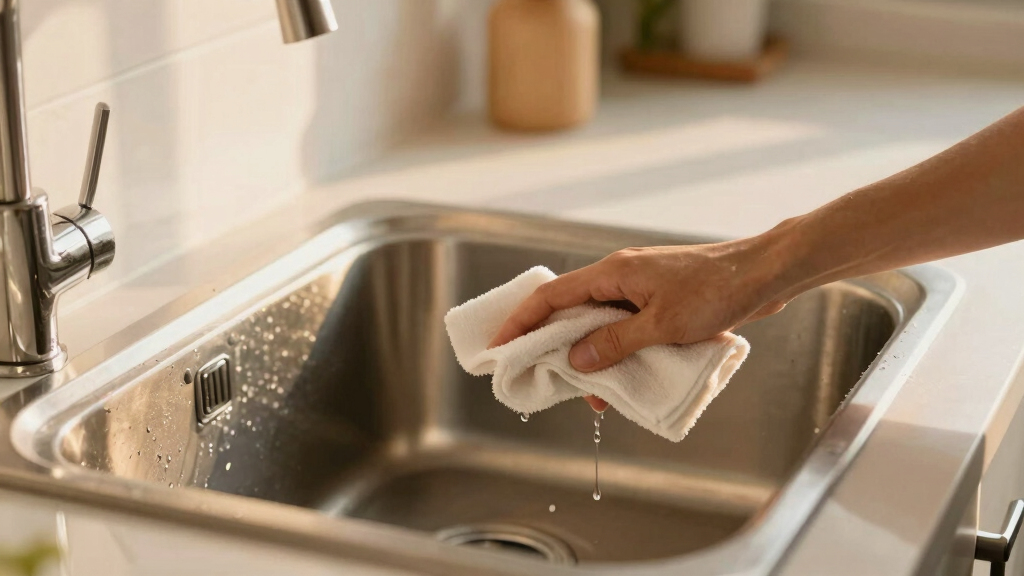
Wiping with a soft microfiber cloth or sponge not only removes these residues but also prevents micro-scratches that can trap dirt and diminish shine. Think of it as giving your sink a quick polish—this habit preserves the finish and reduces the need for more intensive cleaning later. For example, after washing dishes, a quick wipe with a dry cloth helps maintain the mirror-like appearance, as well as prevents fingerprints and streaks that can make the surface look dull.
Consistent daily maintenance creates a protective barrier, making weekly or monthly deep cleans more effective and less labor-intensive, ultimately extending the life of your sink’s finish.
As an affiliate, we earn on qualifying purchases.
The Best Cleaning Products for Stainless Steel (And What to Avoid)
Choosing the right cleaning products is crucial because not all cleaners are created equal. Mild dish soaps or specialty stainless steel cleaners are formulated to clean effectively without damaging the delicate finish. These products contain surfactants that lift dirt and grease while maintaining the integrity of the metal’s surface, thus preserving its luster and preventing scratches.
Harsh chemicals like bleach or ammonia-based cleaners may seem effective at disinfecting or whitening, but they can strip away protective layers, leading to a dull appearance or even corrosion over time. Similarly, abrasive scrubbers like steel wool or rough pads can scratch the surface, creating tiny grooves that trap dirt and moisture, accelerating wear and rust formation.
For stubborn stains, a paste of baking soda and water provides a gentle yet effective cleaning option. The baking soda acts as a mild abrasive that lifts grime without scratching, and when used along the grain of the steel, it minimizes the risk of damage. This approach balances cleaning power with surface preservation, ensuring your sink remains shiny and intact for years to come.
Understanding the tradeoff—harsh chemicals may clean faster but damage the surface, while gentler products require more effort but protect your investment—helps you make better choices that extend the lifespan of your sink.
eco-friendly stainless steel cleaning products
As an affiliate, we earn on qualifying purchases.
As an affiliate, we earn on qualifying purchases.
How to Clean and Remove Water Spots and Fingerprints
- Spray a mixture of equal parts vinegar and water onto the sink. Vinegar’s acetic acid dissolves mineral deposits and water spots by breaking down the calcium and lime deposits that cause them. This is especially important in areas with hard water, where mineral buildup can etch the surface over time, leading to permanent dullness or spots.
- Let it sit for a few minutes to allow the vinegar to penetrate and loosen the deposits. Wiping with a microfiber cloth following the grain of the steel ensures that dirt and residues are lifted without scratching or dulling the finish. This step is crucial because aggressive scrubbing can create micro-scratches that trap dirt, making the surface look dull and uneven.
- Dry thoroughly with a clean towel. Removing all moisture prevents water spots from reforming and inhibits mineral deposit formation. This is especially important in humid environments where residual moisture can accelerate rust or corrosion, even on stainless steel.
- Optional: Use a small dab of mineral oil or stainless steel polish to restore shine and make fingerprints less noticeable. The oil forms a protective barrier that repels water and fingerprints, maintaining that mirror-like finish longer. Applying this after cleaning helps preserve the surface’s luster and keeps it looking pristine between deep cleans.
For example, after cleaning, a quick buff with mineral oil not only enhances shine but also creates a barrier that prevents fingerprints and water spots from settling, saving time on future cleaning routines.
microfiber cleaning cloth for sinks
As an affiliate, we earn on qualifying purchases.
As an affiliate, we earn on qualifying purchases.
The Best Way to Remove Rust and Hard Water Stains
Rust and mineral deposits are common in areas with hard water, and they can cause permanent damage if not addressed promptly. Rust spots are particularly damaging because they indicate corrosion that has penetrated the metal’s surface, weakening its structural integrity. Mineral deposits, on the other hand, can form a crust that dulls the finish and makes cleaning more difficult if left untreated.
Using vinegar or a commercial stainless steel cleaner is effective because they dissolve mineral deposits and inhibit further buildup. Vinegar’s acidity breaks down calcium, lime, and rust stains, while many commercial products contain corrosion inhibitors that protect the surface during cleaning.
For rust spots, a paste of baking soda and water acts as a gentle abrasive that lifts rust without scratching. Applying the paste directly to the rust, then letting it sit for 10-15 minutes, allows the baking soda’s mild abrasives to loosen the rust particles. Gently scrubbing along the grain prevents scratching and ensures the rust is removed evenly.
Rinsing thoroughly and drying immediately is critical to prevent reoxidation and further corrosion. If stubborn stains persist, a specialized rust remover can be used, but always follow the manufacturer’s instructions carefully—incorrect use can cause surface damage or discoloration. Regular maintenance and prompt attention to stains are the best strategies to preserve your sink’s appearance and functionality over time.
As an affiliate, we earn on qualifying purchases.
Protect Your Sink from Scratches and Dents
Using a sink mat or grid is a simple yet effective way to protect your sink’s surface from scratches and dents caused by heavy cookware, utensils, or dropped objects. These barriers absorb impact and prevent direct contact, which can mar the finish or cause dings that are difficult to repair.
Regularly avoiding steel wool or abrasive scrubbers is essential because micro-scratches accumulate over time, dulling the surface and creating tiny niches where dirt and moisture can collect, promoting corrosion. Instead, opt for microfiber cloths or silicone scrubbers that clean effectively while maintaining the integrity of the finish.
For example, a silicone scrubber can clean baked-on food without scratching, and a sink mat catches any dropped utensils or pots, preventing damage and making cleanup easier. These small investments in protective accessories significantly extend your sink’s lifespan and keep it looking like new longer.
Remember, prevention is key—protective measures may seem minor but have a major impact on maintaining a pristine, damage-free surface over time.
Comparing Cleaning Methods: What Works Best
| Method | Effectiveness | Best For | Notes |
|---|---|---|---|
| Vinegar & Water | Excellent for water spots and mineral deposits | Water stains, fingerprints | Natural, non-toxic, inexpensive, and readily available, vinegar is effective because its acidity dissolves mineral buildup and helps restore shine. However, overuse or leaving it on for too long can etch sensitive finishes, so it should be used carefully and rinsed off thoroughly. |
| Baking Soda Paste | Great for stubborn stains and rust spots | Hard water stains, rust, minor scratches | Gentle and safe, baking soda’s mild abrasiveness lifts grime without scratching. Using it along the grain of the steel helps prevent micro-scratches that dull the surface and trap dirt. |
| Commercial Stainless Steel Cleaner | Highly effective, restores shine and removes tough grime | Deep cleaning, restoring dull surfaces | Follow instructions carefully to avoid over-application or damage. These cleaners often contain polishing agents that rejuvenate the finish but should be used sparingly for routine maintenance. |
| Olive Oil or Mineral Oil | Creates protective shine and fingerprint resistance | Polishing, maintaining gloss between cleans | Use sparingly to avoid greasy residues. Applying a small amount and buffing along the grain maintains shine and adds a protective layer that repels fingerprints and water spots. |
Choosing the right method depends on your specific needs—whether eliminating water spots, removing rust, or restoring dull areas. Combining these techniques strategically ensures your sink remains pristine and durable over time.
Frequently Asked Questions
What is the best way to remove stains and water spots from my stainless steel sink?
Vinegar mixed with water is highly effective for dissolving mineral deposits and water spots. Spray it on, let it sit for a few minutes, then wipe with a microfiber cloth along the grain. Dry thoroughly afterward to keep it streak-free.Can I use bleach or other harsh chemicals to clean my stainless steel sink?
Harsh chemicals like bleach can damage the finish and cause discoloration or rust. Stick to mild dish soap, vinegar, or stainless steel-specific cleaners to keep your sink safe and shiny.How do I prevent scratches and maintain the shine?
Use a soft microfiber cloth or silicone scrubber instead of steel wool. Installing a sink mat or grid adds a protective barrier, and polishing with mineral or olive oil restores shine while reducing fingerprints.What natural cleaning methods are effective for stainless steel?
Vinegar and baking soda are your best natural options. Vinegar tackles water spots and mineral deposits, while baking soda lifts stubborn stains and rust without scratching.How often should I deep clean my stainless steel sink?
Deep cleaning once a week is ideal, especially if you notice buildup or water spots. Regular daily rinsing and wiping will extend the time between deep cleans.Conclusion
Keeping your stainless steel sink looking new isn’t about harsh scrubbing or fancy products. It’s about gentle, consistent habits—rinsing, wiping, and protecting.
Picture that mirror-like shine every time you open the cabinet. Now, take a moment to implement these simple steps—your sink will thank you for years to come.
Halloween Picks
halloween
As an affiliate, we earn on qualifying purchases.