TL;DR

Get cleaning gear delivered free with Prime
- Fast, free delivery on millions of items
- Prime Video, Amazon Music and more included
- Member-only deals all year
Clean your wooden cutting board immediately after use with hot water and mild soap. Disinfect weekly with vinegar or hydrogen peroxide, dry thoroughly, and oil regularly to prevent cracks and odors. Proper care keeps it safe and durable for years.
Imagine chopping carrots on a beautiful, seasoned wooden board. It feels warm, sturdy, and almost alive beneath your hands. But without proper cleaning, that same board can harbor bacteria, odors, and stains that threaten your kitchen’s hygiene.
In this guide, you’ll learn how to keep your wooden cutting board safe, fresh, and well-preserved. From daily cleaning routines to periodic deep maintenance, you’ll get the straightforward tips you need—no gimmicks, just results.
Clean immediately after each use with hot water and mild soap to prevent bacterial buildup.
Disinfect weekly with vinegar, hydrogen peroxide, or diluted bleach, especially after raw meat prep.
Dry thoroughly, standing the board upright, to avoid warping and mold growth.
Oil your board weekly with food-grade mineral oil to keep the wood conditioned and crack-free.
Avoid soaking or dishwasher cleaning—these can permanently damage your wooden cutting board.
The Simple Step-by-Step for Daily Cleaning
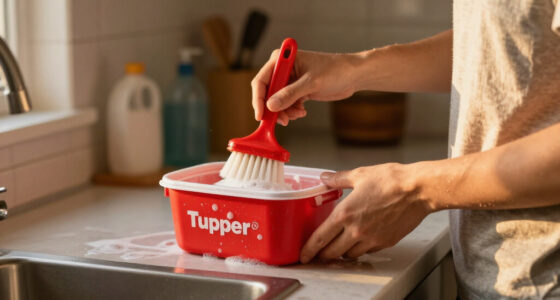
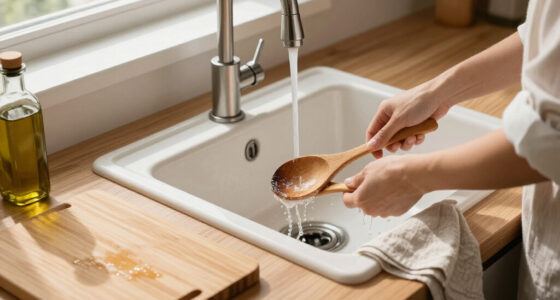
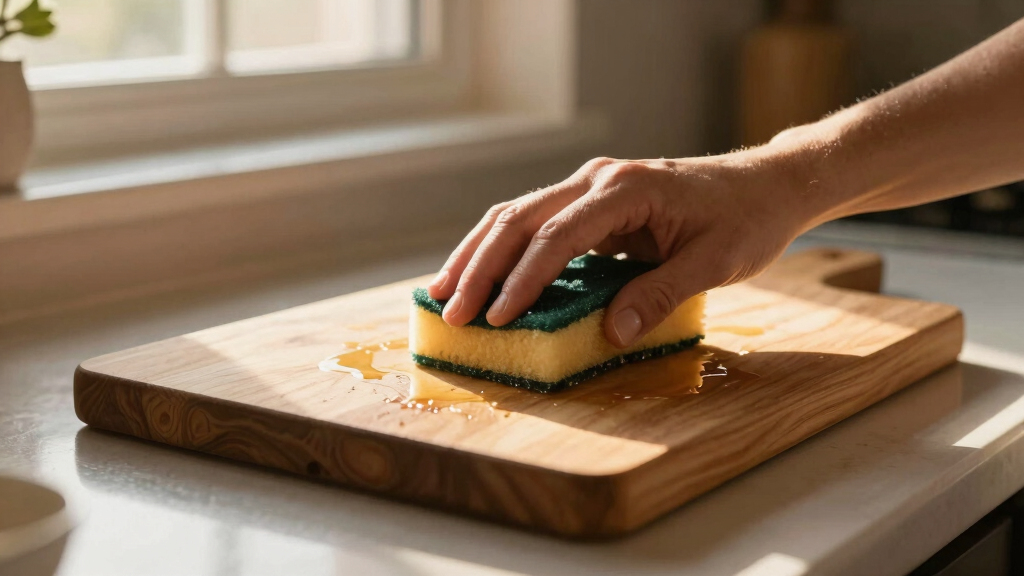
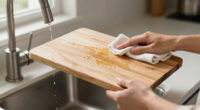
Cleaning your wooden cutting board after each use is the first line of defense against bacteria. Use hot water and a splash of mild dish soap, scrubbing with a soft brush or sponge. This quick action washes away food particles and reduces bacterial buildup.
For example, imagine finishing slicing raw chicken and vegetables. Rinse immediately, scrub with a brush, then rinse again. This keeps your board safe and odor-free.
Remember: never soak the board in water, as prolonged moisture can cause warping or cracking.
food-grade mineral oil for cutting boards
As an affiliate, we earn on qualifying purchases.
As an affiliate, we earn on qualifying purchases.
How to Disinfect Your Board Without Damaging It
- Spray white vinegar directly on the surface or wipe with a cloth soaked in diluted hydrogen peroxide (3%).
- Let it sit for 5-10 minutes to kill bacteria. This contact time is crucial because it allows the vinegar or hydrogen peroxide to break down bacterial cell walls effectively, reducing the risk of cross-contamination that might not be visible.
- Rinse with hot water and dry thoroughly.
Disinfection is especially important after preparing raw meats or seafood. Vinegar is a natural choice, while hydrogen peroxide offers a more potent option. Unlike harsh chemicals, these are safe and effective for wooden surfaces.
For instance, after handling raw chicken, a quick vinegar spray can significantly reduce bacteria, but it’s important to note that vinegar alone may not eliminate all pathogens. Combining it with thorough rinsing and drying ensures your board remains hygienic.
natural disinfectant vinegar for kitchen
As an affiliate, we earn on qualifying purchases.
As an affiliate, we earn on qualifying purchases.
Natural Ways to Remove Odors and Stains
- Sprinkle coarse salt over the board, cut a lemon in half, and scrub in circular motions. The citric acid from the lemon and the abrasive salt work together to lift stains and neutralize odors. This combination is effective because the acid breaks down organic compounds responsible for smells and stains, while the salt physically abrades residues, preventing buildup.
- Alternatively, make a paste of baking soda and water, spread it over the surface, and let sit for 10 minutes before rinsing. Baking soda neutralizes acids and absorbs odors, making it a gentle yet powerful natural deodorizer. Leaving it on longer allows it to penetrate deeper into the wood’s pores, addressing embedded smells.
Imagine a board that’s been used for garlic and onion, smelling strong even after washing. A lemon and salt scrub can refresh it, but understanding the chemistry helps you see why these methods are effective and how they work in tandem to restore freshness.
These natural methods are gentle but very effective, especially when you want to avoid harsh chemicals. Recognizing their mechanisms helps you choose the right approach for different types of stains and odors.
wooden cutting board cleaning brush
As an affiliate, we earn on qualifying purchases.
As an affiliate, we earn on qualifying purchases.
Drying and Maintaining Your Board for Longevity
After cleaning, dry your board with a clean towel and stand it upright to air dry completely. Moisture is the enemy; it causes warping, cracking, and bacterial growth. Proper drying prevents moisture from lingering in the wood’s pores, which can lead to mold or bacteria developing unseen beneath the surface.
Regularly oil your board with food-grade mineral oil or beeswax. This step nourishes the wood, seals pores, and prevents cracks. When the wood is well-oiled, it becomes more resistant to moisture absorption, reducing the risk of warping or splitting over time. The oil also helps maintain the wood’s natural integrity, keeping it from drying out and becoming brittle.
For example, oiling once a week keeps even the most used boards in top shape, making them look vibrant and feeling sturdy. Proper maintenance creates a protective barrier, extending the life of your board significantly.
As an affiliate, we earn on qualifying purchases.
Deep Cleaning and When to Reconsider Your Board
Every few months, sanitize with a diluted bleach solution—one tablespoon of bleach per gallon of water—and rinse thoroughly afterward. This deep cleaning penetrates the wood’s pores, killing bacteria that might be hiding beneath the surface. While regular washing removes surface debris, deep cleaning is crucial for maintaining hygiene, especially in busy kitchens or with frequent raw meat prep.
Check your board for deep cracks, warping, or persistent odors. If cleaning and oiling no longer restore it, it might be time to replace it. Cracks can harbor bacteria, making even thorough cleaning ineffective, which poses health risks. A warped or split board can also become unsafe for chopping, as uneven surfaces can cause knives to slip.
For instance, a board with deep splits can harbor bacteria despite regular cleaning, making replacement the safest choice. Recognizing these signs ensures you maintain a hygienic and safe food prep surface.
Common Mistakes to Avoid When Cleaning Wooden Boards
- Don’t put your wooden board in the dishwasher—the high heat and water will warp or crack it. The intense heat can cause the wood fibers to swell and then contract unevenly, leading to warping or splitting.
- Avoid harsh chemicals and abrasive scrubbers that can scratch or damage the surface. These can compromise the wood’s natural antimicrobial properties and create crevices where bacteria can hide.
- Never soak the board overnight; prolonged water exposure ruins the wood’s structure. Excess water can penetrate deep into the pores, causing swelling, warping, and eventual cracking.
Imagine a friend who soaked their board for hours and ended up with a warped, cracked mess. Simple mistakes like these can cost you your favorite kitchen tool and compromise hygiene.
Stick to hand washing, gentle cleaners, and immediate drying for best results. Proper technique ensures the longevity and safety of your wooden board.
Frequently Asked Questions
How often should I clean and oil my wooden cutting board?
Clean your board after each use with hot water and mild soap. Oil and condition it weekly or whenever it looks dry or dull. This routine keeps it safe and in top shape for years.
Can I put my wooden cutting board in the dishwasher?
No, the high heat and prolonged water exposure in a dishwasher will warp or crack the wood. Hand washing is safest and most effective.
What’s the best way to remove stubborn stains and odors?
Use a mixture of coarse salt and lemon to scrub the surface. For persistent smells, a baking soda paste works wonders. These natural options refresh your board without damage.
How do I prevent my wooden board from cracking or warping?
Keep it dry, avoid soaking, and regularly oil with food-grade mineral oil. Proper maintenance prevents the wood from drying out and cracking over time.
Are disinfectants safe for wooden boards?
Yes, vinegar, diluted hydrogen peroxide, and carefully used diluted bleach are safe options. Always rinse thoroughly and dry after disinfecting.
Conclusion
Keeping your wooden cutting board safe and long-lasting is about consistency and gentle care. A quick wash, regular disinfection, thorough drying, and periodic oiling form the core of good maintenance.
Picture your board as a trusty kitchen partner—well-cared for, it will serve you beautifully for years. The simple act of proper cleaning transforms a humble wooden surface into a durable, bacteria-resistant work of art.
Halloween Picks
halloween
As an affiliate, we earn on qualifying purchases.