TL;DR

Get cleaning gear delivered free — and shop member deals
- Fast, free delivery on millions of items
- Access to Prime Big Deal Days deals on October 6–7
- Prime Video, Amazon Music and more included
Mopping tile floors without streaks is about using the right tools, a damp mop, and quick drying. Regular cleaning and proper technique prevent dull spots and residue, leaving your tiles shiny and streak-free.
Nothing ruins the look of your freshly cleaned tile floors faster than stubborn streaks. They turn a simple chore into a frustrating game of trial and error. But with the right approach, you can make your tiles gleam—no streaks, no residue, just a clean, polished surface.
In this guide, you’ll learn how to prep, the best tools to use, and simple techniques to keep your floors spotless and streak-free. Whether you’re tackling a small bathroom or a large kitchen, these practical tips will help your tile floors look their best every time.
Always pre-clean floors by sweeping or vacuuming to prevent dirt smudging into streaks.
Use a damp microfiber mop and a mild, vinegar-based solution for best results.
Mop in figure-eight or back-and-forth motions, rinsing and wringing often.
Dry each section immediately with a microfiber cloth or squeegee to stop water spots.
Regular, consistent mopping keeps tiles bright and streak-free with less effort.
Tile care field guide
The Right Way to Mop Tile Floors Without Streaks
TL;DR: Streak-free tile is less about scrubbing harder and more about controlling dirt, water, and drying time. Sweep first, use a damp microfiber mop, choose a mild cleaner, rinse often, and dry each section quickly for a clean polished finish.
Up to 50%
Fewer streaks when microfiber is paired with a vinegar-water solution instead of a sponge mop and harsh chemicals, according to home cleaning experts.
Weekly
Regular light mopping prevents residue buildup, so each clean needs less water, less cleaner, and less effort.
Damp, not soaked. Clean, not cloudy. Dry before water spots get a vote.
Sweep or vacuum first so grit does not smear into dull streaks.
Absorbs efficiently and leaves less standing water on tile.
Use pH-neutral cleaner or diluted vinegar for ceramic and porcelain.
Microfiber cloth or squeegee stops cloudy water marks.
What Actually Causes Streaks
Most streaks come from one of three things: dirt left on the floor, too much water, or cleaning residue that dries unevenly. The cleanest result comes from a tight sequence, not a stronger chemical.
Loose dirt turns into drag marks
Dust, crumbs, and grit behave like muddy pigment once wet. A quick vacuum or sweep keeps the mop from spreading soil across the surface.
Too much water dries unevenly
A dripping mop leaves puddles in grout lines and low spots. Damp passes clean the tile while limiting cloudy evaporation marks.
Residue dulls the shine
Harsh chemicals, excess soap, and dirty mop water can all leave a film. Rinse often and keep the cleaner gentle.
The Streak-Free Cleaning Flow
Think of the job as five linked moves. Each step removes one common streak trigger before it has a chance to dry on the tile.
Clear
Move chairs, mats, and bins so every pass can be smooth and continuous.
Sweep
Remove loose debris before water turns it into smudges.
Dampen
Wring the microfiber mop until it is moist, never dripping.
Mop
Use figure-eight or back-and-forth strokes with slight overlap.
Dry
Finish each section with a clean microfiber cloth or squeegee.
Tool Choices at a Glance
Microfiber wins for everyday streak control because it balances absorption with water control. Spin mops help with larger spaces, while sponge mops are better reserved for heavy messes.
| Type of Mop | Streak Control | Best For | Pros | Watchouts |
|---|---|---|---|---|
| Microfiber Mop | ✓ Excellent | Everyday cleaning and shiny finishes | Highly absorbent, gentle, easy to wring | Needs washing after use |
| Spin Mop | ~ Good | Deep cleaning larger kitchens or halls | Efficient wringing and fast coverage | Less precise in tight corners |
| Sponge Mop | ✗ Risky | Heavy-duty spills and stubborn messes | Good pressure on stuck-on grime | Can leave too much water and residue |
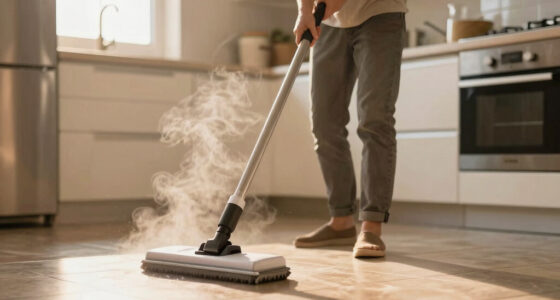
| Steam Mop | ~ Situational | Sealed ceramic or porcelain tile | Cleans deeply without added chemicals | Avoid on sensitive stone or damaged grout |
Streak Prevention Impact
The biggest improvements come from reducing residue and water left behind. These simple habits have the highest payoff for a brighter tile finish.
Best everyday mix
Use one gallon of warm water with a few drops of dish soap, or add one-half cup of white vinegar for ceramic or porcelain tile. Always test first, especially if the tile has a special finish.
What to avoid
- Soaking-wet mops that flood grout lines.
- Bleach or ammonia for routine tile cleaning.
- Too much soap, which can dry into a dull film.
Trace the Shine
A streak-free floor is a connected chain: remove grit, limit moisture, spread cleaner evenly, and dry before residue settles.
Quick Answers
Use these checks when your tile looks cloudy, streaked, or dull after cleaning.
Can I use vinegar on all tile?
Vinegar is generally fine for ceramic and porcelain tile, but avoid it on marble, granite, travertine, and other natural stone because acid can etch the surface.
How often should I mop?
Once a week works for most homes. High-traffic kitchens, entryways, and bathrooms may need light spot cleaning between full mops.
Why does my floor look cloudy?
Cloudiness usually means too much cleaner, dirty mop water, or slow drying. Rinse the mop more often and wipe the section dry right away.
What motion works best?
Figure-eight or steady back-and-forth passes spread moisture evenly. Slightly overlap each stroke so no strip dries differently from the rest.
Start with a clean slate: the secret to streak-free floors begins before mopping
Before you even pick up the mop, clear your floor of furniture and debris. Vacuum or sweep thoroughly to remove loose dirt, dust, and crumbs. This prevents scratching and reduces the chance of dirt smudging into streaks when you mop.
Imagine trying to clean a glass window with smudges already on it—mopping over dirt just pushes it around. The same applies to tile floors. A quick pre-clean sets the stage for a streak-free shine.
As an affiliate, we earn on qualifying purchases.
Choose your cleaning solution wisely: what really works on tile
Use a mild, pH-neutral tile cleaner or a homemade mix. A simple solution of water with a few drops of dish soap or vinegar works well. Avoid harsh chemicals like bleach or ammonia—they can leave residues that cause streaks or damage your tiles.
For example, a mix of one gallon of warm water with ½ cup of white vinegar can cut through grime without leaving streaks. Testing any solution on a small, inconspicuous area first is crucial because some tiles or finishes can react poorly to certain chemicals, leading to discoloration or surface damage. Choosing the right solution is about balancing effectiveness with gentleness—using too harsh a chemical might clean well initially but can leave residues that cause streaks or degrade your tile over time. Conversely, overly weak solutions may not remove dirt effectively, leading to dullness and residue buildup that shows as streaks. Finding that sweet spot ensures your tiles stay shiny and streak-free without risking damage.
As an affiliate, we earn on qualifying purchases.
Pick the right tools: microfiber mops beat traditional sponges
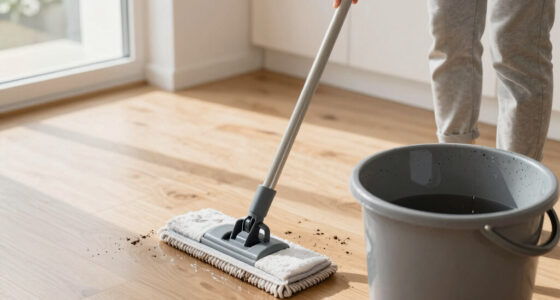
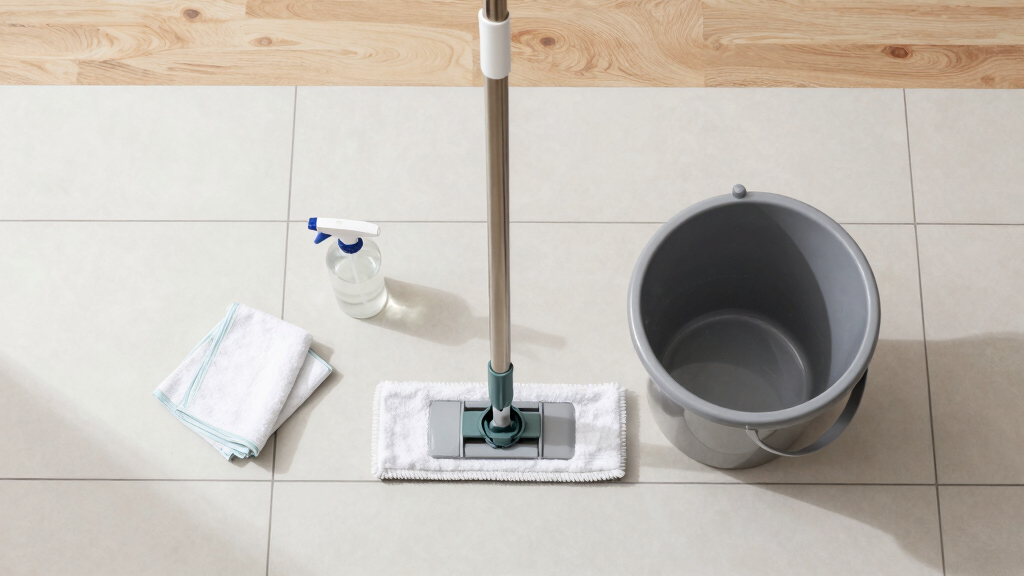
Microfiber mops are your best bet for streak-free floors. They absorb water efficiently and are gentle on tiles and grout. Look for a mop with a swivel head for easy maneuvering around corners and tight spaces.
For instance, a lightweight microfiber mop with an adjustable handle makes cleaning less tiring and more precise. Avoid overly wet mops—damp, not soaked—because excess water seeps into grout and causes streaks. Using a mop that retains moisture well allows you to control the amount of water on the floor, which is essential since too much water can drip into grout lines and cause streaks or even damage over time. The tradeoff here is between absorption and control; microfiber mops excel because they dry quickly and hold just enough moisture to clean effectively without leaving puddles, which are the primary cause of streaks. Investing in quality tools that balance water retention and ease of use can dramatically improve your results, making the difference between streaky and gleaming tiles.
As an affiliate, we earn on qualifying purchases.
Master the mopping technique: how to avoid streaks every time
- Start with a damp, well-wrung mop—no dripping! Excess water is the enemy of streak-free floors because it can cause uneven drying and leave water spots.
- Mop in a figure-eight or back-and-forth motion, covering each section fully without overloading it with water. This ensures even distribution and prevents pooling.
- Rinse and wring your mop often, especially if the floor is dirty or greasy. This prevents dirt from spreading around and redepositing onto the floor, which can cause streaks or dull patches.
- Overlap your strokes slightly to ensure even coverage. Think of it like painting—smooth, consistent strokes matter to prevent streaks and uneven patches.
- Finish each section by drying it immediately with a microfiber cloth or squeegee to prevent water spots and streaks. This quick-dry step is crucial because it stops water from evaporating unevenly, which can leave cloudy streaks or patches.
For example, after mopping the kitchen floor, go over it with a dry microfiber cloth to wipe away any remaining moisture. This final step is key to a streak-free finish because it removes excess water and ensures an even, shiny surface.
As an affiliate, we earn on qualifying purchases.
Dry quickly: your secret weapon against streaks
Drying your tiles immediately after mopping prevents water spots and streaks because residual water can evaporate unevenly, leaving cloudy patches or streaks. Use a clean, dry microfiber cloth or a squeegee to remove residual water, ensuring an even dry surface.
If your environment is well-ventilated, air drying can also work—just be patient and allow sufficient time for evaporation. The key here is speed—drying quickly minimizes the chance for water to evaporate unevenly and cause streaks. Imagine how a freshly cleaned car looks after being wiped down—shiny, smooth, and streak-free. The same principle applies to your tiles. When you dry the surface promptly and thoroughly, you prevent water from pooling or evaporating unevenly, which can cause streaks or cloudy patches. This step might seem minor, but it’s often the difference between a spotless shine and a dull, streaked surface.
Keep your routine consistent for the best results
Regular mopping, about once a week, prevents dirt buildup that causes streaks. This keeps your tiles looking bright and reduces the effort needed each time. Spot cleaning spills immediately also helps maintain that streak-free shine.
For example, wiping up a spilled juice on the kitchen tile right away prevents sticky residue and streaks from forming during your next main cleaning session. Consistency in cleaning not only maintains the appearance but also reduces the need for heavy scrubbing or chemical use, which can sometimes lead to residue buildup or damage. The tradeoff is between frequent, light cleaning and infrequent, intensive cleaning—regular maintenance keeps your tiles in optimal condition and makes each cleaning easier. Over time, this routine minimizes the risk of dull spots, soap scum, or streaks, ensuring your floors stay gleaming with minimal effort.
Compare your options: mops for streak-free floors in a glance
| Type of Mop | Best for | Pros | Cons |
|---|---|---|---|
| Microfiber Mop | Everyday cleaning, streak-free finish | Highly absorbent, gentle, easy to wring | Can be pricier, needs washing |
| Spin Mop | Deep cleaning larger areas | Efficient wringing, covers more ground | Less control in tight spots |
| Sponge Mop | Heavy-duty messes | Good for stubborn stains | Leaves more water residue, risk of streaks |
Frequently Asked Questions
Can I use vinegar on all types of tile?
Vinegar is safe for most ceramic and porcelain tiles, but avoid using it on natural stone like marble or granite, as it can etch the surface. Always test a small area first.How often should I mop my tile floors?
Once a week is usually enough for most homes, but high-traffic areas or kitchens might need more frequent cleaning. Spot clean spills immediately to maintain shine.What’s the worst thing to do when mopping tile floors?
Using a soaking wet mop or harsh chemicals can leave residue and cause streaks. Also, skipping drying or pre-cleaning can make floors look dull and streaky.Should I use a steam mop on my tile floors?
Steam mops are great for deep cleaning without chemicals, but check your tile type first. They work well on ceramic and porcelain but avoid natural stone unless approved by the manufacturer.Conclusion
Getting your tile floors streak-free isn’t about fancy products—it’s about technique, tools, and timing. Use a damp microfiber mop, mop smartly, and dry quickly. That’s all it takes for tiles that look freshly polished every time.
Next time you clean, picture your tiles sparkling like a mirror—no streaks, just pure shine. With these simple steps, your floors will stay flawless, and your cleaning effort will be more satisfying than ever.
Fall Picks
fall essentials
As an affiliate, we earn on qualifying purchases.