TL;DR

Get cleaning gear delivered free — and shop member deals
- Fast, free delivery on millions of items
- Access to Prime Big Deal Days deals on October 6–7
- Prime Video, Amazon Music and more included
Hard water stains on glass shower doors are mineral deposits from calcium and magnesium in water. Using vinegar, baking soda, or commercial cleaners, along with preventive habits, keeps your glass clear and shiny with less effort.
Vinegar dissolves calcium deposits—making it a powerful, natural stain remover.
Wiping down your shower glass after each use prevents most hard water stains.
Use non-abrasive tools to avoid scratching your glass during cleaning.
Commercial cleaners work well for stubborn stains but always follow safety instructions.
Water-repellent coatings and water softeners can dramatically cut down on future stains.
What Are Hard Water Stains and Why Do They Stick?
Hard water stains are mineral deposits, primarily calcium and magnesium, that cling to glass surfaces after water evaporates. When water droplets dry on your shower door, these minerals leave behind a white, chalky film. It’s like tiny, invisible footprints that build up over time, turning your glass cloudy and streaky. For example, after a week of showers without wiping down, a faint haze can turn into a stubborn film. Understanding that these stains are mineral deposits—not soap scum or dirt—helps you choose the right cleaning approach.
glass shower door water stain remover
As an affiliate, we earn on qualifying purchases.
As an affiliate, we earn on qualifying purchases.
How To Prevent Hard Water Stains From Forming
- Squeegee or wipe down your glass after each shower. Think of it as giving your doors a quick towel dry—this stops water droplets from evaporating and leaving deposits.
- Use a microfiber cloth to dry the glass completely. It’s like polishing a car, leaving no water behind.
- Apply a water-repellent coating or sealant designed for glass surfaces. This creates a barrier, making water bead and roll off instead of sticking around.
- Install a water softener if your water is very hard. It reduces mineral content, so less mineral buildup occurs.
vinegar cleaning spray for shower glass
As an affiliate, we earn on qualifying purchases.
As an affiliate, we earn on qualifying purchases.
The Best Natural Ways to Remove Hard Water Stains
Natural ingredients like vinegar and lemon juice are surprisingly powerful against mineral deposits. They’re safe, eco-friendly, and won’t harm your glass. Here’s how to use them:
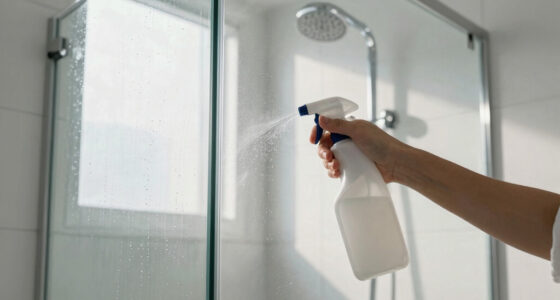
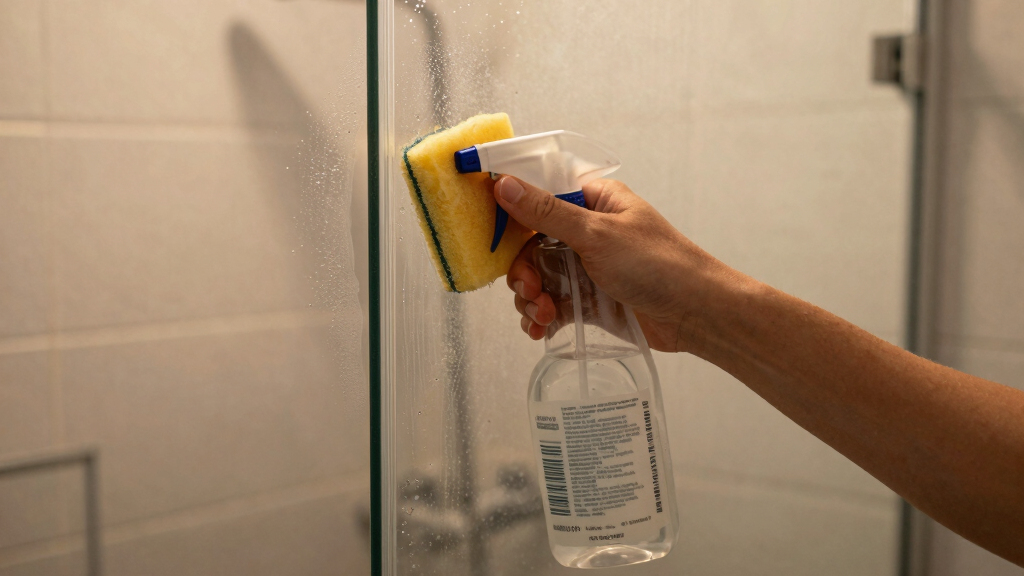
- Vinegar Solution: Mix equal parts white vinegar and water in a spray bottle. Spray generously on the stained areas and let sit for 5-10 minutes. Wipe with a soft cloth or non-abrasive sponge, then rinse thoroughly and dry. The acidity of vinegar breaks down calcium carbonate, dissolving the mineral buildup effectively. This method is especially useful for light to moderate stains, but for stubborn deposits, a longer sitting time or repeated application may be necessary, which might require patience but is gentle on your glass and environment.
- Lemon Juice: Squeeze fresh lemon onto stubborn spots, or soak a cloth in lemon juice and apply. The citric acid dissolves calcium deposits. Rinse and dry for a streak-free shine. Lemon also leaves a fresh scent and can be combined with vinegar for enhanced cleaning power. Using lemon juice regularly can prevent buildup, as its acidity helps keep mineral deposits at bay, but overuse might cause slight etching on very delicate glass surfaces, so moderation is key.
- Baking Soda Paste: Combine baking soda with a little water or vinegar to make a gentle abrasive paste. Apply it to the stains with a soft cloth, scrub lightly, then rinse and dry. Baking soda’s mild abrasiveness helps lift stains without scratching, but excessive scrubbing can wear down the glass’s protective coating over time. It’s a good option for those who prefer a non-acidic approach, especially for light stains or maintenance cleaning, because it balances cleaning power with safety for your glass surface.
water-repellent coating for glass shower doors
As an affiliate, we earn on qualifying purchases.
As an affiliate, we earn on qualifying purchases.
How to Use Commercial Stain Removers Safely and Effectively
If natural remedies don’t cut it, commercial products can do the trick. Look for cleaners formulated specifically for hard water stains, often containing acids like citric or phosphoric acid. Always read and follow the manufacturer’s instructions carefully. To use:
- Spray the product on the stained glass.
- Let it sit for the recommended time—usually 5-15 minutes.
- Use a soft cloth or sponge to scrub gently.
- Rinse thoroughly and dry with a microfiber cloth.
water softener for hard water stains
As an affiliate, we earn on qualifying purchases.
As an affiliate, we earn on qualifying purchases.
How to Safely Scrub Without Scratching Your Glass
Scratching is the biggest risk when cleaning glass. To avoid it, choose non-abrasive tools like soft cloths, sponge pads, or microfiber towels. Never use steel wool or harsh scrub brushes. Instead, gently wipe or scrub in circular motions. For stubborn stains, let your cleaning solution sit longer to loosen mineral buildup before wiping. For example, after spraying vinegar, a gentle wipe with a microfiber cloth removes stains without scratching. Using the right tools and techniques preserves the integrity of your glass, preventing tiny scratches that can trap dirt and mineral deposits, making future cleaning more difficult. The tradeoff is that aggressive scrubbing might seem to remove stains faster, but it risks permanent damage and etching, which can make stains even harder to remove and compromise the glass’s clarity over time.
Step-by-Step: The Easy Routine to Keep Your Glass Stain-Free
Here’s a simple routine to keep those stains at bay:
- After each shower: Use a squeegee or microfiber cloth to wipe down the glass. This prevents water from drying on the surface and minimizes mineral deposits, which are more difficult to remove once dried in.
- Weekly deep clean: Spray a vinegar-water solution or apply a commercial cleaner. Let sit for 5-10 minutes, then wipe and rinse. Regularly removing mineral buildup before it hardens makes cleaning easier and prevents stubborn stains from forming.
- Monthly prevention: Consider applying a water-repellent coating or sealant to maintain the barrier against mineral buildup. This proactive step reduces the frequency of cleaning and the risk of etching or staining, preserving the clarity of your glass for longer.
Comparing Homemade and Store-Bought Cleaners
| Feature | Natural Cleaners (Vinegar, Lemon) | Commercial Cleaners |
|---|---|---|
| Effectiveness | High for light to moderate stains | Often more potent, better for stubborn stains |
| Safety | Eco-friendly, non-toxic | Contains acids or chemicals, follow instructions |
| Cost | Very affordable | Varies, but generally more expensive |
| Ease of Use | Simple, requires mixing and patience | Quick sprays, ready to use |
Final Tips to Keep Your Shower Sparkling
Prevention saves time and effort. After cleaning, consider applying a hydrophobic coating. It’s like giving your glass a raincoat that makes water bead and slide off. Also, keep a microfiber cloth handy and wipe down the glass after every shower. Regular maintenance prevents those stubborn stains from forming in the first place. Imagine stepping into a shower with glass so clear, it looks invisible—like a window to a bright, clean space. The key is consistency; the more regularly you maintain, the less intensive your cleaning sessions will become. The investment in preventive measures—like coatings and habits—pays off by reducing long-term cleaning time, chemical use, and potential damage, ultimately preserving the clarity and integrity of your glass for years to come.
Frequently Asked Questions
What is the fastest way to remove hard water stains from glass shower doors?
Spray a mixture of equal parts vinegar and water, let it sit for 5-10 minutes, then wipe with a soft cloth and rinse. For stubborn stains, repeat or add a baking soda paste for extra scrubbing power.Are natural remedies safe for my glass and environment?
Yes, vinegar, lemon juice, and baking soda are eco-friendly, non-toxic, and gentle on glass. They are safe for your family and won’t harm plumbing or the environment when used properly.How often should I clean my shower doors to prevent stains?
Wipe down the glass with a microfiber cloth or squeegee after every shower. Deep clean with vinegar or commercial products weekly to keep stains from building up.Can I use steel wool or harsh scrubbers?
No. Steel wool and abrasive scrubbers can scratch glass, making it more prone to stains and damage. Stick with soft cloths or non-abrasive pads.What’s the best way to prevent hard water stains long-term?
Apply a water-repellent coating, install a water softener, and make it a habit to dry your shower glass after each use. These steps keep your glass gleaming without constant scrubbing.Conclusion
A streak-free, sparkling shower door isn’t just about cleaning—it’s about routine. Small daily habits make the biggest difference. Imagine stepping into a bathroom where the glass gleams, reflecting your effort in every drop of water that slides right off. That’s the power of smart cleaning and prevention in action.Halloween Picks
halloween
As an affiliate, we earn on qualifying purchases.