
TL;DR

Get cleaning gear delivered free with Prime
- Fast, free delivery on millions of items
- Prime Video, Amazon Music and more included
- Member-only deals all year
Oil stains on garage floors are common but treatable. Acting quickly with the right cleaning agents and sealing the surface afterward prevents future stains and makes cleanup easier.
Oil stains on your garage floor are more than just an eyesore—they can be a stubborn mess that seems almost impossible to clean. Imagine the dark, slick patches that seem to seep into the concrete like ink spreading on paper. The good news? You don’t need harsh chemicals or professional help for most stains. With some simple tools, a bit of patience, and a few household ingredients, you can restore your floor’s clean look.
In this guide, you’ll learn exactly how to tackle both fresh and old oil stains. Plus, I’ll share tips for preventing future messes and making your garage easier to clean in the long run. Whether you’re dealing with a small drip or a big spill, these techniques will help you get your concrete looking fresh and bright again.
Act fast on fresh oil spills—immediate cleanup makes a big difference.
Use absorbent materials like baking soda or kitty litter to soak up excess oil before cleaning.
Repeat cleaning steps for stubborn stains—patience pays off.
Sealing your garage floor can cut future stains by up to 80%.
For large or old stains, professional cleaning can save time and effort.
How to Get Oil Stains Off Your Garage Floor
TL;DR: Oil stains are common, stubborn, and treatable. Act fast, absorb first, scrub with the right cleaner, repeat for old stains, then seal the concrete so future spills stay on the surface instead of sinking in.
Concrete behaves like a sponge. The sooner you stop the oil from soaking in, the easier the cleanup gets.
Key insight for fresh and set-in stainsOil does not just sit on concrete.
Unsealed concrete is porous, so motor oil and transmission fluid can seep below the surface. Fresh stains are mostly a surface problem; old stains become a deeper extraction job that needs time, stronger cleaners, and repeated passes.
Stop the spread
Use rags or paper towels to blot, then cover the spot with kitty litter, baking soda, or sawdust before scrubbing.
Break the grip
Use concrete degreaser or a baking soda paste, let it dwell for 15-30 minutes, then scrub with a stiff brush.
Seal the surface
After cleaning and drying, apply a concrete sealer so spills bead up instead of soaking deep into the slab.
Blot
Press and lift. Do not smear the oil across clean concrete.
Absorb
Cover the stain and let the powder or litter draw out residue.
Scrub
Use dish soap, degreaser, warm water, and a stiff-bristled brush.
Rinse
Flush the area with clean water, then inspect the stain after drying.
Repeat
Old stains often fade gradually rather than disappearing in one round.
When regular soap is not enough.
Set-in oil needs dwell time and abrasion. A commercial concrete degreaser, baking soda paste, TSP solution, or power washer can help, but gloves, goggles, ventilation, and label directions matter.
Escalation ladder
Move from mild to stronger methods so you do not overwork the concrete or use unnecessary chemicals.
- Level 1: Dish soap, warm water, and a stiff brush for light stains.
- Level 2: Baking soda paste or eco-friendly degreaser for moderate stains.
- Level 3: Concrete degreaser plus repeated scrubbing for dark, aged marks.
- Level 4: Power washing or professional service for large embedded patches.
Choose the cleaner by stain age.
Household cleaners can handle many fresh spills. For old, dark stains, use products designed for concrete and expect multiple rounds before judging the result.
| Method | Best For | Effectiveness | Ease | Eco Profile | Repeat Needed? |
|---|---|---|---|---|---|
| Dish Soap & Water | Fresh, light drips | ✓ Good | ✓ Easy | ✓ High | ~ Sometimes |
| Baking Soda Paste | Small stains and mild residue | ~ Moderate | ~ Moderate | ✓ High | ✓ Often |
| Commercial Degreaser | Old or stubborn oil | ✓ Very effective | ~ Moderate | ~ Check label | ~ Maybe |
| Power Washer + Degreaser | Large concrete areas | ✓ Excellent | ~ Moderate | ~ Less chemical use | ✗ Less often |
Make the next spill easier.
The cleanest garage floor is the one that resists oil before it sinks in. Drip trays, absorbent mats, leak checks, and concrete sealer all reduce future scrubbing.
Seal after cleaning
A concrete sealer creates a stain-resistant shield. Clean thoroughly, let the slab dry, then apply thin coats according to the product directions. Many kits for a standard 2-car garage cost roughly $50-$100.
Build a spill routine
Keep absorbent material, a stiff brush, dish soap, and gloves nearby. Use drip pans under known leaks, inspect vehicles early, and place rubber tiles or mats where oil spots usually appear.
Fast answers before you scrub.
Most garage oil stains improve with the right method, but the stain’s age, concrete finish, and cleaner dwell time all affect the result.
Can vinegar remove oil stains?
Vinegar may help with light residue, but it is weak against old oil. Use it for maintenance, not deep set-in spots.
How long does a tough stain take?
Fresh stains may lift in under an hour. Older stains can take multiple applications over several days.
Are eco-friendly degreasers effective?
Many bio-based or enzyme cleaners work well on recent stains. Very old stains may still need a stronger concrete degreaser.
When should I call a pro?
Call for large, deeply embedded stains, repeated DIY failures, or any spill connected to electrical or safety concerns.
Bottom line: Absorb first, scrub second, repeat when needed, and seal once the floor is clean and dry. That sequence turns oil cleanup from a panic job into a manageable routine.
Why Oil Stains Are So Hard to Remove
Oil stains cling to concrete because of its porous nature. Think of concrete like a sponge—once oil gets inside, it’s not just sitting on the surface. Over time, the oil seeps deeper, making it harder to scrub away. Fresh stains are easier to remove because they haven’t yet soaked in fully.
For example, if you notice a drip from your car immediately after parking, you can often wipe it up with a rag or dish soap. But if that stain has been sitting for months, it’s like trying to erase ink from a page—it’s a tougher fight.
The key to success? Act fast and use the right tools.
As an affiliate, we earn on qualifying purchases.
Step-by-Step: How to Remove Fresh Oil Stains
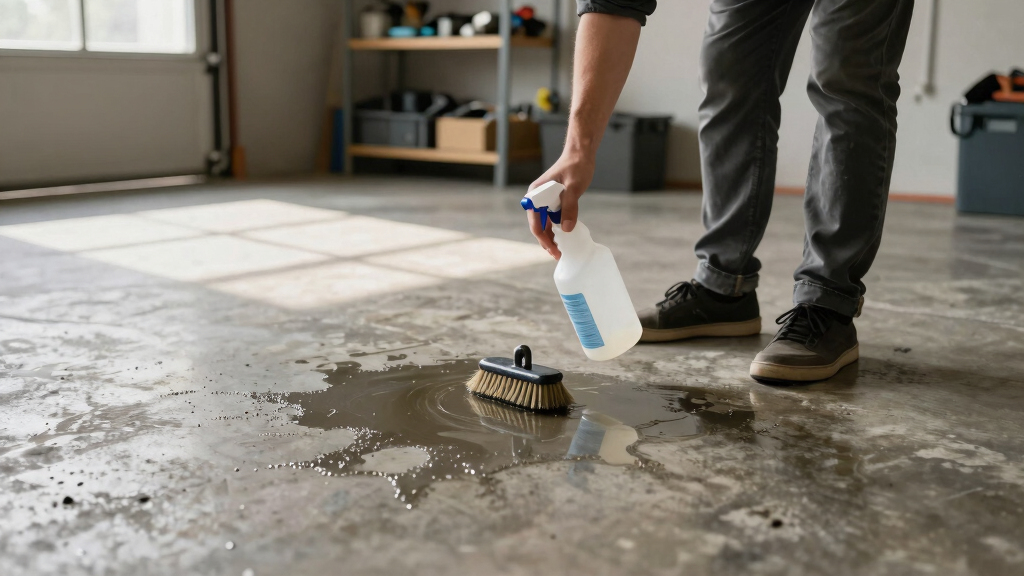
- Blot up excess oil. Use paper towels or rags to soak up as much as possible without spreading it further.
- Apply an absorbent material. Cover the stain with kitty litter, baking soda, or sawdust. Let it sit for at least 15 minutes to soak up residual oil.
- Scrub with a degreaser or dish soap. Mix a few drops of dish soap or a commercial degreaser with warm water. Use a stiff-bristled brush to scrub the stain thoroughly.
- Rinse and repeat. Wash the area with clean water. For stubborn stains, repeat the process until it lightens noticeably.
- Dry and inspect. Use a clean cloth or squeegee to remove excess water. Check if the stain has faded or if more treatment is needed.
This simple process works well on recent spills—think of it as giving your floor a quick, thorough bath before the oil has a chance to set in deep.
concrete sealant for garage floors
As an affiliate, we earn on qualifying purchases.
As an affiliate, we earn on qualifying purchases.
The Fight Against Old, Set-In Oil Stains
Old oil stains are like a stubborn stain on a favorite shirt—they’ve soaked in deep, and regular cleaning won’t cut it. To tackle these, you need stronger methods. Start with a commercial degreaser designed for concrete, or use a homemade solution like a paste of baking soda and water.
Apply your chosen cleaner generously over the stain. Let it sit for 15-30 minutes, giving the active ingredients time to break down the oil’s grip. Then, scrub vigorously with a stiff brush. Rinse with water and repeat if necessary.
For really tough stains, some folks turn to a power washer or use a mixture of trisodium phosphate (TSP) with water—just be sure to wear gloves and goggles for safety. Patience and persistence are your friends here.
absorbent cat litter for oil spills
As an affiliate, we earn on qualifying purchases.
As an affiliate, we earn on qualifying purchases.
Compare Common Cleaning Methods for Oil Stains
| Method | Effectiveness | Ease of Use | Environmental Impact |
|---|---|---|---|
| Dish Soap & Water | Good for fresh stains | Easy | High |
| Baking Soda Paste | Moderate | Moderate | High |
| Commercial Degreaser | Very effective | Moderate | Variable (check label) |
| Power Washer + Degreaser | Excellent | Moderate | Lower (less chemical use) |
Choosing the right method depends on your stain’s age and your preference for eco-friendly options. For light stains, dish soap or baking soda might do the trick. For older, stubborn stains, a commercial degreaser or power washer will be more effective.
baking soda for oil stain cleaning
As an affiliate, we earn on qualifying purchases.
As an affiliate, we earn on qualifying purchases.
Prevention: How to Keep Oil Off Your Garage Floor
The best way to deal with oil stains? Prevent them in the first place. Start with simple habits—use drip trays or catch pans under your car, especially if you notice oil leaks. Regularly check your vehicle for leaks and fix problems early.
Sealing your concrete can cut down on oil absorption by up to 80%, according to some industry sources. It’s a smart investment—just apply a high-quality concrete sealer after cleaning and drying the floor.
Also, consider placing absorbent mats or rubber tiles in high-traffic areas where oil spills are likely. Small steps like these save a lot of scrubbing later.
How to Seal Your Garage Floor for Less Mess
Sealing your garage floor is like putting a stain-resistant shield over it. You’ll need to thoroughly clean and dry the surface before applying a concrete sealer. Follow the manufacturer’s instructions carefully—most require a clean, dry surface and multiple thin coats.
Sealers come in matte or glossy finishes, and some are designed specifically to repel oils. Expect to pay around $50-$100 for a good kit covering a standard 2-car garage.
Once sealed, future spills will bead up on the surface, making cleanup as easy as wiping with a rag. It’s a long-term investment that pays off in easier maintenance.
What If a Spill Gets Out of Hand? When to Call in Pros
If your oil stain is old, large, or deeply embedded, DIY might not cut it. Professional cleaning services use industrial equipment and stronger chemicals to remove stubborn stains. Sometimes, they also apply commercial-grade sealers afterward to prevent future issues.
For instance, if your driveway has a dark, 3-foot-wide patch that refuses to budge after multiple attempts, calling a pro with a power washer and industrial degreasers can save you hours of frustration.
Remember, for structural or safety concerns—like oil leaking onto your garage’s electrical wiring—hire licensed professionals immediately.
Frequently Asked Questions
Can I use vinegar to remove oil stains?
Vinegar can help with light stains because of its mild acidity, but it’s not very effective on old or stubborn oil spots. For tough stains, stronger degreasers or commercial products are a better bet. Vinegar is best as a supplementary cleaner or for routine maintenance.
How long does it take to remove a tough stain completely?
It varies. Light, recent stains may lift after one or two treatments in 30 minutes to an hour. Older, set-in stains might require multiple applications over several days, especially if you need to follow up with power washing or sealing. Patience and persistence are key.
Are eco-friendly degreasers just as effective as commercial ones?
Many eco-friendly degreasers now contain enzymes and bio-based ingredients that match the effectiveness of traditional chemical cleaners. They’re safer for your family and the environment and work well on recent stains. For very old or heavy stains, a stronger product might be necessary.
Should I seal my garage floor after cleaning?
Yes. Sealing your concrete after cleaning prevents future oil absorption and makes stains easier to wipe away. It’s especially helpful if you frequently park vehicles with minor leaks or want to maintain a cleaner look long-term.
Can I remove oil stains from a sealed concrete floor?
Sealed floors resist absorption, so stains are easier to clean or may sit on top of the surface. To remove oil from sealed concrete, use a mild degreaser and scrub carefully. In some cases, resealing might be necessary if stains penetrate or damage the seal.
Conclusion
Oil stains are a common garage nuisance, but they’re not invincible. Quick action with simple household ingredients often does the trick, especially if you catch the spill early. Sealing your concrete turns your garage into a cleaner, more manageable space—making future messes easier to handle.
Next time you see that dark patch spreading across your floor, remember: a little effort now saves hours of scrubbing later. Keep your garage looking fresh, and don’t let oil stains win the battle.
Columbus Day / Indigenous Peoples' Day Picks
long weekend sales
As an affiliate, we earn on qualifying purchases.