TL;DR
Open a free Amazon Business account
Business pricing, bulk buying and tax-exempt orders.
Create a free accountAs an affiliate, we earn on qualifying purchases.
Removing pet urine from hardwood requires quick action, proper cleaning solutions, and sometimes refinishing. Enzymatic cleaners are most effective for stains and odors, especially if used promptly. Regular maintenance and preventive measures help keep floors damage-free.
If you’ve ever faced a surprise pet accident on your hardwood floor, you know how stressful it can be. The rich, warm glow of your wood can turn dull, stained, or smelly in moments. But the good news? Quick, targeted cleaning can save your floor and your sanity. This guide walks you through real-world steps to tackle pet urine, protect your investment, and keep your home smelling fresh.
Whether it’s a fresh accident or an old stain, understanding what works—and what doesn’t—makes all the difference. We’ll cover the best cleaning methods, the latest products, and practical tips to prevent future mishaps. Ready to get your floor back to its natural beauty? Let’s go.
Act immediately after a pet accident to prevent stains and odors from setting in.
Use enzymatic cleaners designed for pet stains—they’re the most effective and safest for your hardwood.
Old or deep stains may require sanding and refinishing; don’t hesitate to get professional help when needed.
Seal your hardwood floors with a durable finish to resist future damage and make cleaning easier.
Prevent accidents by training your pet, using deterrents, and protecting high-risk areas with rugs.
Why Fast Action Matters When Cleaning Pet Urine from Hardwood
Cleaning pet urine immediately minimizes the risk of lasting stains, odors, and damage to your hardwood. When urine sits, it seeps into the wood, breaking down the finish and causing discoloration. The acids and enzymes in urine can stain and weaken the wood’s surface over time.
Delaying cleanup allows these substances to penetrate deeper, making the stain more difficult to remove and increasing the likelihood of permanent damage. This can lead to a need for costly refinishing or replacement. Furthermore, persistent odors can attract your pet to re-mark the same spot, creating a cycle of accidents that become harder to control. Acting swiftly not only preserves the aesthetic of your floor but also helps maintain a healthy, odor-free environment.

Nature's Miracle Hard Floor Cleaner, Stain & Odor Remover, 24 oz
- Dual-Action Cleaner: Removes stains and odors
- Safe for Hard Surfaces: Sealed wood, tile, linoleum, vinyl
- Protects Floor Finish: Removes stains without damage
As an affiliate, we earn on qualifying purchases.
As an affiliate, we earn on qualifying purchases.
Step-by-Step: How to Clean Pet Urine Off Hardwood Floors in 4 Easy Moves
- Blot up fresh urine with paper towels or a clean, dry cloth. Press firmly but don’t rub—that pushes urine deeper into the wood and finish, making it more difficult to remove later.
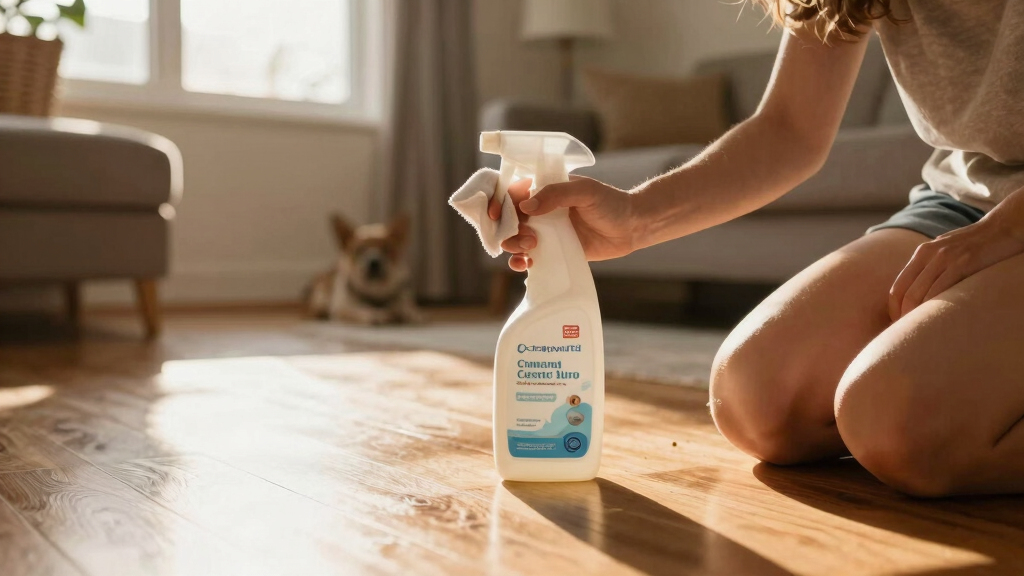
- Apply an enzymatic cleaner designed for pet stains. Follow the instructions—spray generously, ensure full coverage of the affected area, and wait 10-15 minutes. This allows the enzymes to break down the proteins in urine, neutralizing odors at their source rather than just masking them. Rubbing or scrubbing too hard can damage the finish, so gentle blotting is key.
- Rinse with clean water and blot dry. Rinsing removes residual cleaner and urine particles, reducing the chance of lingering odors or residue buildup that could compromise the finish or encourage re-soiling.
- Seal or refinish if needed. For older or deeply absorbed stains, sanding and applying a new coat of finish or sealant might be necessary to restore the surface’s appearance and protect the wood. This step ensures the stain and odor are fully eradicated and helps prevent future issues.
For example, a pet owner found that promptly using a pet-specific enzyme cleaner and a damp cloth kept the stain from soaking in, saving a costly refinishing job. The key is timely action combined with gentle handling to avoid further damage.
Nature's Miracle Hard Floor Cleaner, Stain & Odor Remover, 24 oz
- Dual-Action Cleaner: Removes stains and odors
- Safe for Hard Surfaces: Sealed wood, tile, linoleum, vinyl
- Protects Floor Finish: Removes stains without damage
As an affiliate, we earn on qualifying purchases.
As an affiliate, we earn on qualifying purchases.
Compare: Cleaning Methods for Pet Urine on Hardwood
| Method | Effectiveness | Risks | Best For |
|---|---|---|---|
| Enzymatic Cleaners | High — breaks down proteins and neutralizes odor, effectively targeting the root cause of stains | Minimal if used as directed; overuse or improper application can lead to residue buildup | Both fresh and old stains, especially when odors persist |
| Vinegar & Baking Soda | Moderate — neutralizes odors and can help lift some stains, but less effective on deep or set-in marks | Potential damage to finish if not diluted properly; can cause discoloration or dullness if overused | Odor control in small, recent spills or minor stains |
| Harsh Chemicals (Bleach) | Low — may bleach or discolor the wood if not used carefully | High — damages finish, can weaken the wood, and is unsafe for pets and humans | Not recommended for routine cleaning; only in extreme cases with professional advice |
Enzymatic cleaners are considered the gold standard because they directly target the proteins and enzymes in urine, making them highly effective at removing both stains and odors. Household solutions like vinegar can help with smell but often lack the strength to fully eliminate deep-seated stains, and their acidity can sometimes harm delicate finishes if not used cautiously. Weighing the trade-offs between safety, effectiveness, and potential damage helps you choose the right method for your situation.

Resolve Urine Destroyer Spray – Pet Stain and Odor Remover, Carpet Cleaner Solution for Cat and Dog Urine, 32 Fl Oz
- Immediate Odor Elimination: Neutralizes urine odors on contact
- Deep Stain Removal: Lifts pet stains and odors from deep within carpets
- Reminding Pets Not to Revisit: Discourages pets from marking the same spot
As an affiliate, we earn on qualifying purchases.
As an affiliate, we earn on qualifying purchases.
How to Deal With Stubborn, Old Pet Urine Stains
Old stains present a unique challenge because they’ve had time to seep, discolor, and bond more firmly with the wood’s surface. The deeper the stain, the more difficult it becomes to remove without risking damage to the finish or the wood itself. In these cases, sanding and refinishing are often the most reliable solutions. Light sanding can help lift the stain and remove surface discoloration, but it must be done carefully to avoid removing too much of the wood or damaging the finish. After sanding, applying a fresh coat of sealant or finish restores the protective layer and prevents new stains from penetrating.
For example, a homeowner with a years-old stain found that light sanding combined with a high-quality polyurethane finish restored the floor’s original shine without the need for replacement. However, aggressive sanding or improper refinishing can cause uneven surfaces or worsen the damage. If the odor persists after cleaning, it indicates the stain may have penetrated deeply, requiring professional assessment and intervention to fully restore the floor’s integrity.
Understanding the depth and severity of the stain guides your decision—sometimes DIY fixes suffice, but persistent odors or severe discoloration warrant expert help to prevent further damage or costly mistakes.
Nature's Miracle Hard Floor Cleaner, Stain & Odor Remover, 24 oz
- Dual-Action Cleaner: Removes stains and odors
- Safe for Hard Surfaces: Sealed wood, tile, linoleum, vinyl
- Protects Floor Finish: Removes stains without damage
As an affiliate, we earn on qualifying purchases.
As an affiliate, we earn on qualifying purchases.
Prevent Future Pet Accidents With These Simple Tips
- Use pet deterrent sprays in problem areas—these sprays alter the scent or texture of the floor, discouraging pets from re-marking or having accidents there. The effectiveness depends on consistent application and the specific pet’s behavior, but they can significantly reduce repeat incidents.
- Place rugs or mats in high-risk zones—these not only protect the wood from direct contact but also make cleanup easier and faster. Choosing washable rugs allows for quick maintenance, minimizing the chance of stains setting in.
- Train your pet consistently to go outside or on designated pads. Clear routines and positive reinforcement reduce accidents over time. Patience and consistency are key, as setbacks can occur, but persistent training reduces the likelihood of future mishaps.
- Seal your hardwood with a durable, water-resistant finish—this creates a barrier that slows absorption of liquids, giving you more time to clean before stains set. A well-sealed floor is more resilient and easier to maintain, but it requires proper application and periodic re-sealing to stay effective.
- Regularly clean your floors with gentle, pet-safe products to prevent buildup of odors and stains. Routine maintenance not only keeps your floors looking good but also minimizes the risk of deep-seated stains from minor accidents.
For instance, a pet owner successfully reduced accidents by adding training sprays and placing a washable rug in the corner where their dog had previously marked, illustrating how targeted preventive measures can make a real difference over time.
When to Call the Pros for Pet Urine Damage
If stains are deep, odors stubborn, or damage severe, professional refinishing is the safest bet. Experts can sand, refinish, and reseal your hardwood to restore its original look—and prevent further damage. Usually, if cleaning doesn’t eliminate odor after 24 hours or stains remain visible, it’s time to seek help. They can assess the extent of the damage, determine if the stain has penetrated deeply, and recommend appropriate solutions, including partial or complete refinishing.
Attempting to fix serious damage yourself can sometimes worsen the problem, especially if you lack the proper tools or experience. Professionals have the expertise to handle delicate refinishing processes without causing additional harm, ensuring your floors regain their beauty and integrity.
Frequently Asked Questions
How quickly should I clean pet urine from hardwood floors?
Clean it as soon as possible—within minutes if you can. Prompt action prevents stains, discoloration, and persistent odors.What’s the best cleaner for pet urine on hardwood?
Enzymatic cleaners specifically formulated for pet stains work best because they break down proteins and neutralize odors effectively.Can I use bleach or harsh chemicals on hardwood?
No, it’s not recommended. Harsh chemicals can damage your finish and the wood itself, making problems worse.What if the stain is old or deeply embedded?
Old stains often need sanding and refinishing. In stubborn cases, professional help can restore your floor’s original beauty.How can I prevent future accidents?
Use training techniques, deterrent sprays, and place rugs or mats in problem areas. Sealing your floor with a durable finish also helps.Conclusion
Quick, targeted action saves your hardwood from lasting damage. Regular cleaning, sealing, and preventive steps make your floors resilient against pet mishaps. Think of it as giving your home a fresh start—one that keeps your floors looking beautiful and smelling clean.
Next time your pet has an accident, remember: swift, gentle cleaning is your best friend. Your hardwood will thank you for it.
Flea & tick season Picks
flea and tick prevention
As an affiliate, we earn on qualifying purchases.